Tag: Stress

  • Cortisol Detox by Chronotype: A Personalized Approach to Reducing Stress and Boosting Health

    Cortisol Detox by Chronotype: A Personalized Approach to Reducing Stress and Boosting Health

    Have you ever wondered why some people thrive early in the morning while others hit their stride well into the evening? This isn’t just about personal preference—it’s rooted in your chronotype, your body’s natural sleep-wake rhythm. Understanding your chronotype can transform your energy levels, stress response, and overall health when paired with cortisol management. This blog explores how a cortisol detox tailored to your chronotype can help you feel balanced and recharged.

    Read Also: Early Signs of Iron Deficiency in Women: Symptoms, Causes, and What You Need to Know

    Cortisol detox by chronotype

    What Is Cortisol and Why Does It Matter?

    Cortisol is often dubbed the “stress hormone.” It plays a vital role in regulating your metabolism, blood pressure, and immune system—and most importantly, it helps you respond to stress. Naturally, cortisol peaks in the early morning to help you wake up and slowly declines throughout the day.

    However, chronic stress, poor sleep, and irregular habits can throw this natural rhythm off balance, leading to issues like:

    • Fatigue
    • Weight gain
    • Insomnia
    • Mood swings
    • Weakened immunity

    A cortisol detox isn’t about flushing the hormone out of your system (your body needs it). It’s about restoring balance and preventing chronic overstimulation by aligning your habits with your body’s chronobiology—your unique circadian rhythm.

    What Is a Chronotype?

    Your chronotype determines when your body naturally wants to sleep, eat, and be active. According to sleep specialist Dr. Michael Breus, there are four primary chronotypes:

    1. Lion – Early risers, peak productivity in the morning, and fade by evening.
    2. Bear – The most common type, aligned with the sun. Energy peaks mid-morning to early afternoon.
    3. Wolf – Night owls. Struggle in the morning, but energised late afternoon and evening.
    4. Dolphin – Light sleepers with irregular patterns. Often anxious and hyper-aware.

    Understanding your chronotype allows you to time key activities like caffeine intake, exercise, and wind-down rituals to better support healthy cortisol cycles.

    Read Also: How Cutting Out Sugar Speeds Up Weight Loss: The Science, Benefits, and Sustainable Tips for Beginners

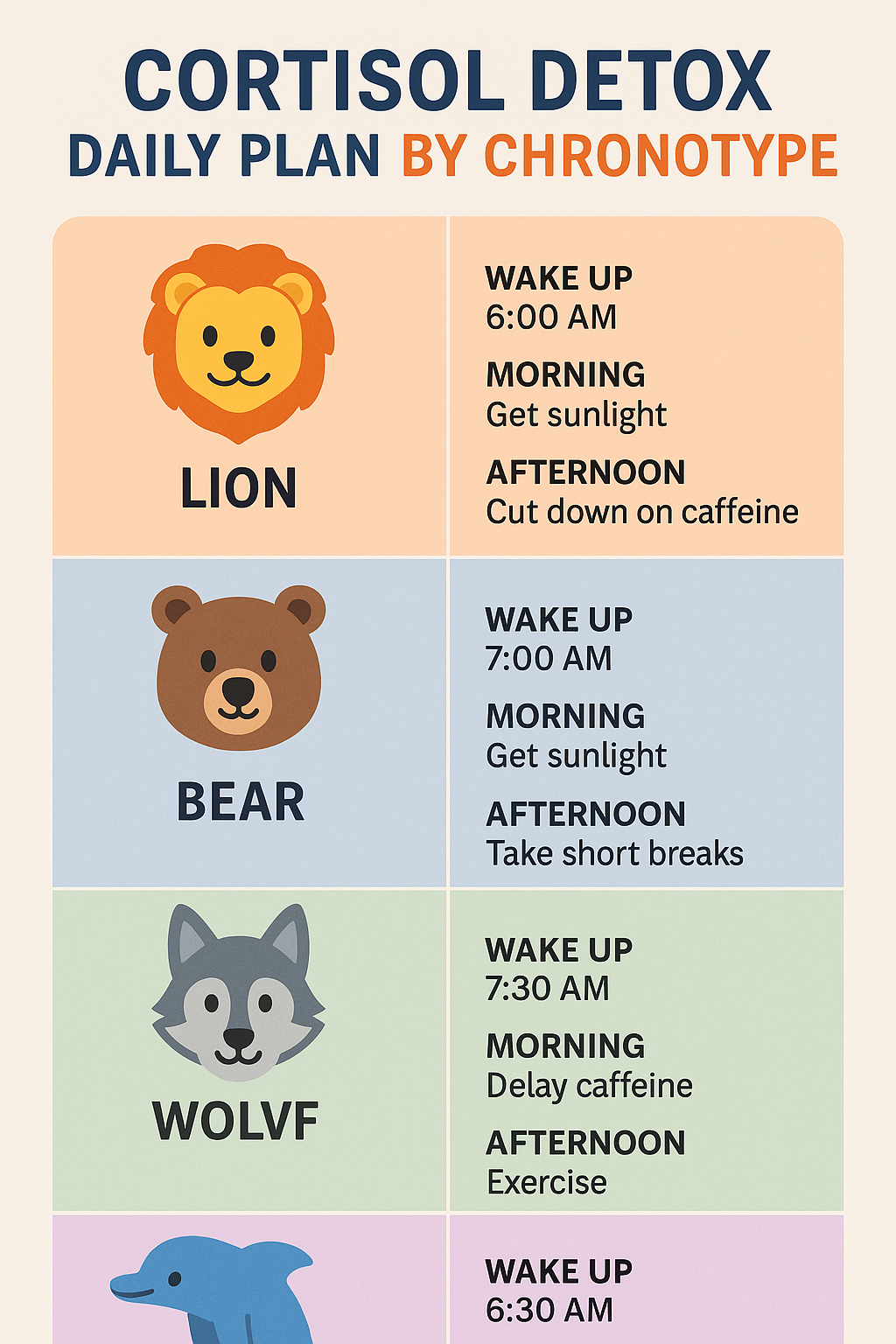
    Cortisol Detox Strategies by Chronotype

    🦁 Lions (Early Risers)

    • Cortisol Peak: Early morning
    • Challenge: Energy crashes in the afternoon
    • Detox Tips:
      • Engage in light morning workouts (e.g., walking or yoga)
      • Avoid caffeine after 10 a.m.
      • Power nap or relax during afternoon slumps
      • Use calming evening rituals to aid sleep (e.g., herbal tea, journaling)

    🐻 Bears (Solar Synced)

    • Cortisol Peak: Mid-morning
    • Challenge: Energy wanes if the routine is disrupted
    • Detox Tips:
      • Stick to a consistent wake-sleep cycle
      • Take screen breaks throughout the day to avoid overstimulation
      • Avoid late meals or alcohol before bed
      • Practice mindfulness during lunch or short walks in nature

    🐺 Wolves (Night Owls)

    • Cortisol Peak: Late afternoon or evening
    • Challenge: Groggy mornings, alert late at night
    • Detox Tips:
      • Delay caffeine until at least 10 a.m.
      • Use a sunrise alarm to wake gradually
      • Schedule workouts in the evening
      • Avoid doomscrolling late at night—use blue light blockers

    🐬 Dolphins (Light Sleepers)

    • Cortisol Pattern: Irregular, often triggered by anxiety
    • Challenge: Poor sleep quality, overthinking
    • Detox Tips:
      • Follow strict sleep hygiene (no screens 1 hour before bed)
      • Try meditation or progressive muscle relaxation at night
      • Limit stimulants like sugar and caffeine
      • Use a weighted blanket or calming music to reduce anxiety

    Universal Cortisol Detox Habits (Good for All Chronotypes)

    Regardless of your chronotype, these strategies can support healthy cortisol levels:

    Read Also: Clear Nasal Congestion with Bay Leaves: The Power of Bay Leaves

    • Get early sunlight exposure – Signals your body to regulate cortisol naturally
    • Eat a balanced breakfast – With protein and healthy fats to stabilize blood sugar
    • Limit sugar and processed foods – Reduce cortisol spikes
    • Exercise daily – Choose the right time based on your chronotype
    • Prioritize restorative sleep – Stick to a regular schedule
    • Practice stress-reducing activities – Meditation, deep breathing, or nature walks

    Final Thoughts: Honour Your Rhythm, Heal Your Stress

    You don’t need a one-size-fits-all routine to manage stress. Instead, aligning your daily habits with your chronotype helps you work with your body, not against it. By doing so, your cortisol levels naturally stabilise, leading to better sleep, less anxiety, and a more productive day.

    So, whether you’re a lion rising with the sun or a wolf who thrives under moonlight, your cortisol detox starts with knowing your rhythm.

  • How Stress is Making You Grow and Look Older Than Your Age

    How Stress is Making You Grow and Look Older Than Your Age

    Stress is Making You Grow and Look Older– Ever looked in the mirror and thought, Why do I look older than I actually am? The answer might not be in your skincare routine or genetics—it could be stress. Chronic stress doesn’t just make you feel exhausted; it accelerates aging, making you look and feel older than you should.

    Read Also: The major role sleep plays in weight loss.

    The Science Behind Stress and Aging

    Stress is your body’s natural response to challenges. In small doses, it helps you stay alert and focused. However, when stress becomes chronic—whether from work, relationships, financial struggles, or daily responsibilities—it starts to take a toll on your physical and mental well-being.

    Your body responds to stress by releasing cortisol, the so-called stress hormone. While cortisol is useful in short bursts, prolonged exposure can damage cells, break down collagen (which keeps your skin firm and youthful), and cause premature aging.

    1. Stress Wreaks Havoc on Your Skin

    Stress is Making You Grow and Look Older

    Your skin is one of the first places stress manifests. Have you ever noticed breakouts or dull skin after a stressful period? That’s because stress weakens the skin’s barrier, making it more prone to dryness, wrinkles, and acne.

    • Collagen Breakdown: Collagen is the protein that keeps your skin smooth and firm. Chronic stress increases inflammation, leading to collagen degradation and the appearance of fine lines and sagging skin.
    • Increased Oil Production: Stress triggers an overproduction of oil, leading to acne, clogged pores, and a tired-looking complexion.
    • Dark Circles and Eye Bags: Lack of sleep due to stress results in fluid retention and poor circulation, leading to puffy eyes and dark circles.

    2. Stress Causes Hair Thinning and Greying

    Your hair can also suffer due to chronic stress. High levels of cortisol disrupt the natural growth cycle, leading to excessive shedding, thinning, and even early greying.

    • Telogen Effluvium: This condition occurs when stress pushes hair follicles into a resting phase, causing noticeable hair loss.
    • Premature Greying: Stress affects melanocytes, the cells responsible for hair pigment, leading to early greying.

    3. Stress Makes You Gain Weight and Lose Muscle Tone

    Have you noticed how stress makes you crave sugary and high-calorie foods? That’s because stress hormones drive you to eat more, leading to weight gain, especially around the midsection. Stress also reduces muscle tone, making your body look less firm and youthful.

    • Belly Fat Accumulation: High cortisol levels encourage fat storage around the abdomen, increasing the risk of metabolic diseases.
    • Muscle Breakdown: Chronic stress decreases protein synthesis, leading to muscle loss and a weaker body structure.

    4. Stress Affects Your Posture and Energy Levels

    When you’re stressed, you may hunch over more, whether at your desk or while using your phone. Over time, poor posture can lead to back pain, a stooped stance, and an overall older appearance.

    • Slouched Posture: Makes you look tired and older.
    • Fatigue: Constant stress drains your energy, making you feel sluggish and affecting your overall vitality.

    5. Stress Accelerates Internal Aging

    Beyond what you see in the mirror, stress also accelerates aging at a cellular level. Studies show that chronic stress shortens telomeres—the protective caps on the ends of DNA strands. Shortened telomeres are linked to a shorter lifespan and increased risks of diseases like diabetes, heart disease, and dementia.

    Read Also: Your Toothpaste Might Be Slowly Poisoning You – Here’s Why

    How to Slow Down Stress-Induced Aging

    Stress is Making You Grow and Look Older

    The good news? You can reverse some of the damage stress has caused by making intentional lifestyle changes.

    • Prioritize Sleep: Aim for at least 7–9 hours of quality sleep each night to allow your body to repair itself.
    • Practice Mindfulness: Engage in meditation, deep breathing, or yoga to reduce stress levels.
    • Stay Active: Exercise releases endorphins, which counteract stress and keep you looking and feeling younger.
    • Eat a Healthy Diet: Focus on antioxidant-rich foods like fruits, vegetables, nuts, and fish to combat inflammation and promote skin health.
    • Stay Hydrated: Dehydration can make your skin look tired and aged, so drink plenty of water daily.
    • Take Breaks and Set Boundaries: Avoid burnout by setting limits at work and taking time for relaxation.
    • Laugh More: Laughter reduces stress hormones and helps you maintain a youthful glow.

    Aging is natural, but stress can make it happen faster than it should. If you’ve been feeling and looking older than your actual age, take a step back and evaluate how stress is affecting your life. By making small, consistent changes, you can slow down stress-induced aging and reclaim your youthful glow—inside and out.

    8 Ways That Stress Shows On Your Face: The Aging Effects Of Anxiety

  • According to Health Experts, Here Are a Number of Ways to Manage Stress

    According to Health Experts, Here Are a Number of Ways to Manage Stress

    Ways to Manage Stress– Stress is an inevitable part of life. Whether it stems from work, relationships, financial struggles, or health concerns, stress can take a significant toll on our physical and mental well-being. While short-term stress can be a motivating factor, chronic stress has been linked to various health issues, including high blood pressure, heart disease, anxiety, and weakened immunity.

    Fortunately, health experts emphasize that managing stress effectively can reduce its negative impact and improve overall well-being. Below are research-backed strategies to help you handle stress and maintain a balanced, healthy life.

    1. Practice Mindfulness and Meditation

    Mindfulness and meditation have gained widespread recognition for their ability to reduce stress. A study published in JAMA Internal Medicine found that mindfulness meditation programs significantly reduced anxiety, depression, and stress in participants.

    • How to practice mindfulness: Focus on the present moment without judgment. This can be done through deep breathing, guided meditation, or simply observing your thoughts.
    • Benefits: Lowers cortisol (the stress hormone), improves emotional regulation, and enhances overall mental clarity.

    2. Exercise Regularly

    Ways to Manage Stress
    Ways to Manage Stress

    Physical activity is one of the most effective ways of managing stress. Exercise releases endorphins, which are natural mood boosters, and helps lower cortisol levels.

    • Best exercises for stress relief:
      • Aerobic exercises (running, swimming, cycling)
      • Yoga (combines physical movement with breath control and relaxation)
      • Strength training (helps build resilience and mental toughness)

    A study published in the American Journal of Psychiatry found that even 30 minutes of moderate exercise five times a week significantly reduces stress and anxiety symptoms.

    3. Maintain a Healthy Diet

    Ways to Manage Stress
    Ways to Manage Stress

    What you eat plays a crucial role in how your body responds to stress. Foods high in sugar and processed carbohydrates can cause spikes in blood sugar, leading to mood swings and increased anxiety.

    • Stress-reducing foods:
      • Fatty fish (rich in omega-3 fatty acids, which reduce inflammation)
      • Dark chocolate (contains antioxidants that lower stress hormones)
      • Nuts and seeds (provide magnesium, a mineral linked to reduced stress)
      • Herbal teas (chamomile and green tea have calming effects)

    According to a study in Psychosomatic Medicine, omega-3-rich foods can reduce the body’s stress response and improve mood.

    4. Prioritize Sleep

    Ways to Manage Stress
    Ways to Manage Stress

    Poor sleep increases stress levels and affects overall health. Chronic sleep deprivation can elevate cortisol levels and lead to fatigue, irritability, and reduced cognitive function.

    • Tips for better sleep:
      • Stick to a consistent sleep schedule.
      • Avoid screens (TV, phones, tablets) at least an hour before bedtime.
      • Create a relaxing bedtime routine (reading, meditation, or light stretching).

    The National Sleep Foundation recommends 7–9 hours of quality sleep per night for adults to help with managing stress and overall health.

    5. Practice Deep Breathing and Relaxation Techniques

    Deep breathing exercises help activate the parasympathetic nervous system, which counteracts the body’s stress response.

    • Techniques to try:
      • 4-7-8 breathing: Inhale for 4 seconds, hold for 7 seconds, and exhale for 8 seconds.
      • Progressive muscle relaxation: Tense and relax different muscle groups to release physical tension.

    Studies in the Journal of Behavioral Medicine show that deep breathing can reduce blood pressure and heart rate, helping the body enter a relaxed state.

    6. Stay Connected and Seek Support

    Social support plays a crucial role in stress management. Talking to friends, family, or a therapist can provide emotional support and a fresh perspective on stressful situations.

    • Ways to stay connected:
      • Join a support group or engage in community activities.
      • Schedule regular catch-ups with loved ones.
      • Consider professional counseling if stress becomes overwhelming.

    Research from Harvard Medical School shows that strong social connections can lower cortisol levels and improve resilience to stress.

    Read Also: Increased Risk of Cancer Amongst Younger People

    7. Manage Time Effectively

    Feeling overwhelmed by responsibilities is a common stressor. Poor time management can lead to frustration, anxiety, and burnout.

    • Time management tips:
      • Prioritize tasks using the Eisenhower Matrix (urgent vs. important tasks).
      • Break big projects into smaller, manageable steps.
      • Use productivity tools (to-do lists, calendar apps, or time-blocking techniques).

    A study in the Journal of Applied Psychology found that individuals who practiced effective time management reported lower stress levels and higher job satisfaction.

    8. Engage in Hobbies and Leisure Activities

    Taking time for enjoyable activities is essential for relaxation and mental health. Engaging in hobbies reduces stress and provides a sense of accomplishment.

    • Relaxing hobbies to try:
      • Painting, drawing, or writing
      • Gardening or spending time in nature
      • Playing a musical instrument
      • Cooking or baking

    A study in The Journal of Positive Psychology found that people who regularly engage in hobbies experience higher levels of positive emotions and lower levels of stress.

    9. Limit Caffeine and Alcohol Consumption

    While caffeine can provide a temporary energy boost, excessive consumption can lead to heightened stress and anxiety. Similarly, alcohol may seem like a stress reliever, but it can disrupt sleep and increase cortisol levels over time.

    • Healthier alternatives:
      • Herbal teas or decaffeinated coffee
      • Water or natural fruit juices
      • Adaptogenic herbs like ashwagandha, known to help reduce stress

    The Journal of Clinical Nutrition reported that excessive caffeine intake can interfere with the body’s ability to regulate stress hormones effectively.

    Read Also: How Your Smartphone is Secretly Damaging Your Brain.

    10. Adopt a Positive Mindset

    Cultivating a positive mindset can significantly affect how you respond to stress. Practicing gratitude and reframing negative thoughts can shift your perspective.

    • Ways to foster positivity:
      • Keep a gratitude journal and list things you’re thankful for daily.
      • Replace negative thoughts with constructive ones.
      • Surround yourself with supportive and optimistic people.

    A study from The Journal of Behavioral Medicine found that individuals who practiced gratitude had lower stress levels and better overall mental health.

    Coclusion

    Stress is unavoidable, but how we respond to it makes all the difference. By implementing these expert-backed strategies, you can develop resilience and maintain a healthier, more balanced life. Remember, managing stress is an ongoing process that requires consistent effort and self-awareness. Whether it’s through mindfulness, exercise, healthy eating, or social support, finding what works best for you will lead to a happier and healthier life.

    By taking proactive steps to reduce stress, you are investing in your long-term well-being and improving your quality of life. Start small, be consistent, and prioritize your mental and physical health every day.