
Category: Health News

Local and Global Health News

  • Study Links Childhood Maltreatment to Alcohol Abuse in Adults.

    Study Links Childhood Maltreatment to Alcohol Abuse in Adults.

    Link Between Childhood Maltreatment and Alcohol Abuse: University of Queensland researchers conducted a study that revealed individuals maltreated as children are three times more likely to be admitted to the hospital for alcohol and substance use by the age of 40 compared to those who were not maltreated.

    The study, led by Dr. Claudia Bull, analyzed data from over 6,000 children born in Brisbane’s Mater Mother’s Hospital. This was between 1981 and 1983. The research tracked the participants from 6 months old to 40 years of age.

    Read Also: A new study establishes a link between sanitizers and brain development.

    Definition of Maltreatment and Association with Alcohol and Substance Use Disorders:

    Researchers at the University of Queensland have conducted a study to to establish a link between Childhood maltreatment and alcohol abuse
    Link Between Childhood maltreatment and Alcohol abuse in adults

    Maltreatment in this study was defined as physical abuse, sexual abuse, emotional abuse, or neglect reported to the Queensland Department of Families, Youth, and Community Care up to the age of 15.

    Children who experienced maltreatment were significantly more likely to be hospitalized for alcohol use disorder as adults. The percentage is 2.86 times more likely compared to those who were not maltreated. They were also 3.34 times more likely to be admitted for a substance use disorder.

    The study highlighted the importance of emotional abuse and neglect as risk factors for alcohol and substance use disorders, in addition to physical and sexual abuse, contrary to previous research that mainly focused on the latter.

    Consistency Across Subtypes of Abuse:

    Regardless of the type of abuse experienced—physical, sexual, or emotional—individuals were approximately three times more likely to suffer from alcohol and substance use disorders later in life.

    Addressing the root causes and consequences of child maltreatment presents an opportunity to prevent many people from suffering from alcohol and substance use disorders in their later lives.

    The research was funded by the Metro South Research Support Scheme and supported by the ALIVE National Centre for Mental Health Research Translation.

    You can find the research paper  Here
    1. A new study establishes a link between sanitizers and brain development.

      A new study establishes a link between sanitizers and brain development.

      Hand sanitizers and brain development: When the COVID-19 pandemic broke out and spread across borders, Items like nose masks and hand sanitizers became tools to prevent or minimize the spread.

      To date, they have become a part of our lives, replacing traditional hand-washing.

      A new study conducted by molecular biologist Erin Cohn and his colleagues suggests that certain common household items can cause damage to supporting cells present in the brain.

      These compounds are found in items like furniture, textiles, disinfectants, and glues.

      Also Read: Increased Risk of Cancer Amongst Younger People

      This new study was carried out based on human cell cultures and mice. The effect of such chemicals was found to be more prevalent in the early stages of brain development.

      Erin Cohn tested the effect of 1,823 compounds on a group of cells known as oligodendrocytes under laboratory conditions.

      He found out that these compounds either killed oligodendrocytes or stopped their maturation.

      The team’s observation confirmed a link between Hand sanitizers and brain development.

      What are oligodendrocytes?

      Oligodendrocytes are critical components for the central nervous system (CNS) functioning.

      Oligodendrocytes generate and maintain myelin, increasing the speed and efficiency of axonal signal conduction and contributing to the structure and maintenance of the ensheathed axons.

      Simply put they ensure that your brain signals move at the required speed.

      How do These Chemicals Find their way into The Brain?

      They enter the brain when you inhale or unknowingly ingest them.

      The team found some of these “brain-killing” compounds used in sanitizers, hand wipes, disinfectant sprays, and household products,

      Another class of toxic compounds found in basic household items was organophosphates.

      They are compounds usually found in textiles, electronics, and furniture. They act as flame retardants.

      Fat-soluble organophosphates can permeate through the skin and find their way into the brain.

      Experiment Carried Out on Mice

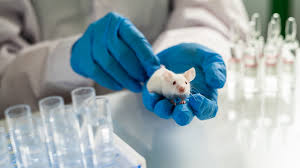
      The researchers gave lab mice an oral dose of three quaternary compounds and found out days later that detectable levels of these compounds were inside the brain tissue of the mice.

      The number of oligodendrocytes in the brain tissues of the mice had reduced after administring 10 daily doses of cetylpyridinium chloride.

      cetylpyridinium chloride is also a type of quaternary compound.

      “We found that oligodendrocytes – but not other brain cells – are surprisingly vulnerable to quaternary ammonium compounds and organophosphate flame retardants,” said Cohn.

      You can find the Publication In the journal Nature Neuroscience.

    2. Increased Risk of Cancer Amongst Younger People

      Increased Risk of Cancer Amongst Younger People

      During last year’s annual American Society of Clinical Oncology meeting, speakers warned of an increased rate of colorectal cancer cases among adults under 40 years.

      According to the experts, the number of cases is expected to double by 2030 and is likely to become the leading cause of cancer deaths for adults in the age bracket 20 to 49.

      Dr. Dimitra Lamprinaki, a researcher at Quadram Institute in Norwich stated that there has been an increase in early-onset colorectal cancer. Stressing that cases are often asymptomatic and younger people often ignore the early signs until it is too late to be removed.

      Read Also: How to deal with sore muscles after an intense workout.

      Possible cause of increased cancer rates among younger adults.

      1. Oral Sex

      Certain Viruses have been linked to contributing to a higher increase in cancer among people in the age bracket 40 to 49 years, mouth cancers being a major part of these cases.

      For example in the UK cases of mouth cancer have seen a rapid increase and half the reported cancer cases have been linked to human papillomavirus (HPV) which is a sexually transmitted virus contracted usually through oral sex.

      Multiple sexual partners make it even worse.

      A study in the journal Cancer highlighted deep kissing heightened the risk of HPV transmission.

      2. Poor Oral Hygiene and Vaping Among Younger People.

      Vaping hinders blood flow to the gums, increasing vulnerability to infections and impeding the healing process.

      The growth of a particular bacteria strain, Fusobacterium nucleatum (F. nucleatum), is promoted by these conditions. F. nucleatum has been linked to various cancers such as breast, colorectal, and head and neck cancers.

      Fusobacterium is described as a sticky bacteria that attaches to teeth and gums, facilitating the entry of other harmful bacteria.

      Poor oral hygiene allows these bacteria to multiply, enter the bloodstream, and potentially reach different organs.

      In early-stage tumors, these bacteria can interfere with chemotherapy and radiotherapy, promoting cancer growth and spread.

      Read Also: What happens if you eat onions every day?

      3. High Consumption of Processed Meat.

      Stomach cancer rates among individuals under 50 have experienced a significant rise, according to a report in the journal Nature.

      Helicobacter pylori (H. pylori), a bacteria residing in the stomach’s mucous layers, is a well-known risk factor for stomach cancer, contributing to approximately 40 percent of cases in the UK.

      The bacteria can lead to atrophic gastritis, a condition characterized by chronic inflammation and thinning of the stomach lining, which can progress to cancer.

      Research indicates that a diet high in processed meats like sausages, bacon, and hamburgers can increase the prevalence of H. pylori in the stomach.

      Lifestyle factors such as excessive consumption of red meat, alcohol, and smoking, combined with the presence of these bacteria, contribute to an elevated risk of stomach cancer.

      4. Consuming Ultra-processed foods.

      Researchers have found that certain species of E. Colli and F.nucleatum bacteria make cancer treatment-resistant. Studies conducted In the past also revealed that consuming ultra-processed foods messes up the stomach’s microbiome in a way that promotes these two bacterial growth.

      “Some bacteria enable gut cells to acquire stem cell-like properties which increases the chance of cancer formation at the cellular level,” says Dr Meera Patel, a researcher in the Colorectal & Peritoneal Oncology Lab at the University of Manchester.

      5. Excessive Alcohol Intake

      Testicular cancer has closely been linked to high alcohol intake according to researchers. Young men who consume more than 14 alcoholic beverages within a week are at a higher risk of testicular cancer.

      The cases of testicular cancer have been found to double yearly since the 1970s and it baffles the minds of cancer experts.