Tag: Health

  • Do you know the Benefits of Fluted pumpkin leave, also called Krobonko in Ghana?

    Do you know the Benefits of Fluted pumpkin leave, also called Krobonko in Ghana?

    If you’ve ever walked through a Ghanaian market or tasted a bowl of rich, green vegetable soup, you may have come across this amazing leafy vegetable without even knowing its full potential. Fluted pumpkin leaves—popularly known as Krobonko—are more than just an everyday ingredient. They are a nutritional powerhouse, a medicinal plant, and a wellness booster that many people underestimate.

    Benefits of Fluted pumpkin leave

    In Ghana and across West Africa, Krobonko is a staple ingredient in soups, stews, and herbal preparations. For generations, it has been used not only for its taste but for its incredible health benefits. Today, more people are beginning to appreciate the numerous Benefits of Fluted pumpkin leaves, and it’s easy to see why.

    In this article, we’ll break down the nutritional richness of this leafy vegetable and explore how adding Krobonko to your meals can improve your health in remarkable ways.

    Read Also: Foods You Should Avoid Reheating (They Can Turn Harmful)

    What Are Fluted Pumpkin Leaves (Krobonko)?

    Fluted pumpkin leaves come from the fluted pumpkin plant, scientifically known as Telfairia occidentalis. Although it’s widely cultivated in Nigeria, the plant is also grown and consumed in Ghana, where it’s called Krobonko. The leaves are dark green, slightly bitter, and tender when cooked. They are commonly used in soups like ebunuebunu, vegetable stews, and herbal teas.

    What makes Krobonko special is its unique nutritional profile. The leaves are loaded with:

    • Iron
    • Potassium
    • Calcium
    • Vitamins A, C, and E
    • Protein
    • Antioxidants

    This combination makes it one of the most nutrient-dense vegetables you can add to your diet.

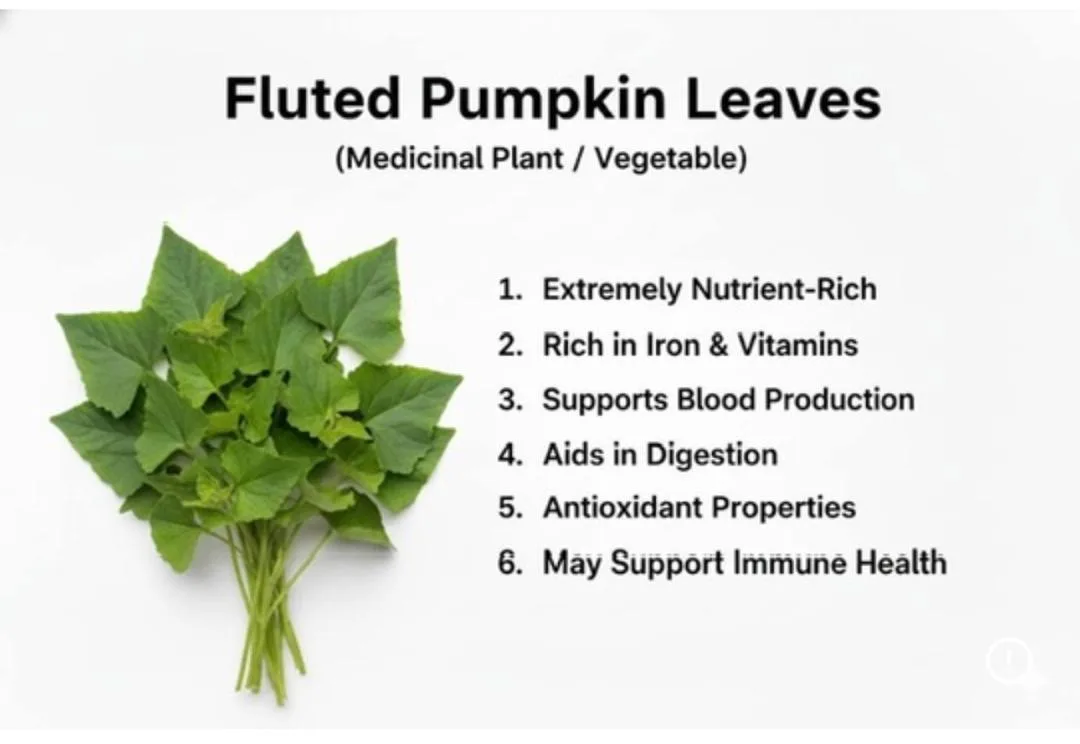
    1. Extremely Nutrient-Rich

    Benefits of Fluted pumpkin leave

    One of the biggest Benefits of Fluted pumpkin leaves is its exceptional nutrient density. A small serving provides a wide range of vitamins and minerals that the body needs daily.

    • Vitamin A supports vision and skin health.
    • Vitamin C boosts immunity and supports collagen production.
    • Iron aids in blood formation and prevents anaemia.
    • Calcium strengthens bones and teeth.
    • Potassium helps regulate blood pressure.

    Many vegetables lose their nutrients when cooked for long, but Krobonko retains most of its nutritional content even after boiling or steaming. It’s a great way to enhance the nutritional quality of any meal.

    2. Rich in Iron and Vitamins

    If you struggle with low iron levels, fatigue, or dizziness, Krobonko is one vegetable you should consider adding to your meals more often. This is why nursing mothers, pregnant women, and individuals managing anaemia are frequently encouraged to eat it.

    The natural iron content in the leaves helps support red blood cell formation and improve oxygen circulation throughout the body. The vitamins work together to support metabolism, protect cells from damage, and keep your system functioning optimally.

    It’s no surprise that one of the most celebrated Benefits of Fluted pumpkin leave is its ability to nourish and energize the body from within.

    Read Also: Ovulation Calculator for Ghanaian Women: Track Your Fertile Days Easily With Our Free Tool

    3. Supports Blood Production

    Traditional African medicine has long used Krobonko leaves to boost blood count. Scientific research now supports this practice.

    The leaf is known for its blood-building properties, making it effective for:

    • Treating mild anaemia
    • Recovering from blood loss
    • Strengthening overall vitality
    • Supporting women after childbirth

    Many people drink Krobonko juice—made by blending the fresh leaves with water—as a natural tonic for improved blood health.

    This makes the Benefits of Fluted pumpkin leaves especially important for children, women, and anyone who feels consistently weak or tired.

    4. Aids Digestion

    If your digestive system needs a reset, Krobonko may be exactly what you need. The leaves contain natural fibre that helps:

    • Promote healthy digestion
    • Prevent constipation
    • Cleanse the gut
    • Support healthy bowel movements

    Fibre is essential for maintaining a healthy digestive tract, and Krobonko provides a generous amount. Including it in your meals can help balance your digestive system while improving nutrient absorption.

    Benefits of Fluted pumpkin leave

    5. Powerful Antioxidant Properties

    Fluted pumpkin leaves are rich in antioxidants—substances that fight harmful free radicals in the body. Free radicals contribute to aging, chronic diseases, and cellular damage. By consuming foods with antioxidant compounds, you support your body’s ability to repair, protect, and rejuvenate itself.

    The antioxidants in Krobonko:

    • Reduce inflammation
    • Support liver health
    • Improve skin glow
    • Strengthen immunity
    • Enhance overall wellness

    This is one of the lesser-known Benefits of Fluted pumpkin leaves, but it’s also one of the most important for long-term health.

    Read Also: Top 5 Worst Sleeping Positions for Your Spine According to Experts (And How to Fix Them)

    6. Boosts the Immune System

    Your immune system is your first defence against infections—and Krobonko helps keep it strong. With its blend of vitamins, minerals, and antioxidants, these leaves serve as a natural immune booster.

    Regular consumption may help reduce your risk of:

    • Common colds
    • Infections
    • Fatigue
    • Inflammation

    This is why many herbal teas and home remedies for recovery include Krobonko as a key ingredient.

    The Benefits of Fluted pumpkin leaves for immunity are especially helpful for children, adults with weak immune systems, and people recovering from illness.

    How to Enjoy Krobonko (Fluted Pumpkin Leaves)

    You can enjoy Krobonko in many tasty and healthy ways:

    • Add it to soups like light soup or vegetable soups.
    • Blend it into smoothies or juices for a nutrient boost.
    • Stir it into stews, yam porridge, or palava sauce.
    • Steam lightly with spices for a simple side dish.

    Always wash thoroughly and cook lightly to preserve its nutrients.

    Read Also: Is Soursop Good for Fatty Liver? Benefits, Risks & Expert Insights

    Final Thoughts

    Krobonko, our beloved fluted pumpkin leaves offer more nutritional and medicinal value than most people realize. The numerous Benefits of Fluted pumpkin leaves make it a must-have ingredient in your kitchen, especially if you’re looking to improve your health naturally.

    From boosting blood production to strengthening your immunity, improving digestion, and providing essential vitamins, this humble vegetable is truly a gift from nature.

    So the next time you prepare a meal, remember to add some Krobonko and enjoy the incredible health benefits packed in every leaf.

  • Foods You Should Avoid Reheating (They Can Turn Harmful)

    Foods You Should Avoid Reheating (They Can Turn Harmful)

    When it comes to what you put in your mouth as food, it is essential to ensure that it is wholesome because there is a thin line between poison and food. Reheating food might look like something normal. In fact, it is. However, there are certain foods that you should avoid reheating.

    Our world is fast-paced, and there is little time to do the very things that are of the utmost importance to us. It makes sense to reheat certain foods as a matter of convenience. Because we won’t always get time to prepare a fresh meal whenever we want to eat. Personally, I like to prepare my stews and soups over the weekend to serve me throughout the week. I do this because it is easy and fits well into my schedule.

    For many of us, this is our routine, and it isn’t bad at all. However, there are some factors we need to consider and precautionary measures necessary to be taken. On that note, let us delve into

    ‎Follow the InfoHealthGh channel on WhatsApp: https://whatsapp.com/channel/0029Va7j1SgGE56e8pagc22u

    Foods You Should Avoid Reheating

    1. Rice

    I know you didn’t expect this, but heating rice improperly, especially when it retains too much moisture, can cause Bacillus cereus, a bacterium that survives cooking and grows when rice sits out too long.

    Maybe you cooked more than you could eat and thought it best to heat it and leave it on the kitchen counter, and continue tomorrow. This is a bad idea because Bacillus cereus thrives best in temperatures ranging from 20–40 °C (room temperature to warm conditions).

    Read Also: The Anti-Inflammatory Food Guide: What to Eat, What to Avoid, and How to Flush Inflammation Fast

    These bacterial pores multiply so fast that leaving the rice to cool just for a few hours poses such risks, even if you freeze it after. You might think refrigeration might be the solution; unfortunately, it only slows growth, but inadequate cooling or reheating can still pose risks. You know your rice is contaminated when you experience Severe vomiting, Diarrhoea, and “Fried Rice Syndrome”

    The best thing you can do is to eat what you cook hot. This is how Bacillus cereus looks under a microscope.

    2. Chicken

    Chicken is one of those foods that tastes even better the next day, but reheating it carelessly can turn it into a digestive nightmare. This isn’t to scare you — it’s simply the reality of how chicken behaves when it cools and gets reheated over and over again.

    Chicken contains dense proteins that change structure when exposed to fluctuating temperatures. When you heat it, cool it, and heat it again, these proteins harden in a way that makes the chicken difficult to digest. This explains why sometimes after eating leftover chicken, you feel bloated, uncomfortable, or strangely full even when you didn’t eat much.

    The more concerning issue, however, is bacteria growth. Maybe you cooked chicken in the evening, ate some, and left the rest on the table because you were tired. By the time you wake up, bacteria such as Salmonella or Campylobacter may have already multiplied. And no — reheating to “very hot” doesn’t always fix the problem. Some toxins remain active even after heating.

    Read Also: 21 Brain-Boosting Foods That Sharpen Focus, Memory & Mental Clarity

    If you experience stomach cramps, diarrhoea, or nausea after eating reheated chicken, your body is simply reacting to the changes the chicken has undergone or the bacteria it picked up while cooling.

    The safest approach? Eat your chicken fresh or refrigerate it immediately after cooling. And if you must reheat it, do it only once and make sure it’s steaming hot all the way through.

    3. Eggs

    This one surprises a lot of people because eggs are widely considered safe, simple, and harmless. But reheating eggs , especially boiled or fried eggs can introduce more problems than you might imagine.

    Eggs are rich in delicate proteins that react quickly to heat. When eggs are reheated, these proteins can break down into compounds that are harder for the stomach to handle. This is why leftover egg stew or that boiled egg you try to warm up in the microwave can sometimes result in bloating or a strange discomfort in your stomach.

    The bigger issue is bacteria growth. Once eggs are cooked and left out, their moisture content and nutrient richness make them a perfect environment for bacteria to multiply. By the time you reheat it, the damage might already be done — and no amount of extra microwaving will reverse bacterial toxins.

    If you’ve ever had reheated eggs and ended up with a sour stomach or loose stool shortly after, now you know why. The safest option is to eat eggs fresh and avoid reheating them entirely.

    4. Kontomire (Spinach)

    If you are Ghanaian, kontomire is a household favourite. Whether it’s stew, yams and kontomire, or abom, it’s part of our culture. But reheating kontomire repeatedly is something you should avoid, and here’s why.

    Read Also: 10 Foods Your Doctor Will Tell You to Avoid If You Have High Blood Pressure and Why

    Leafy greens such as spinach and kontomire contain naturally occurring compounds called nitrates. These compounds are harmless in their fresh state, but when exposed to heat multiple times, they convert into nitrites, and then into nitrosamine substances linked to harmful health effects over long-term exposure.

    To put it simply, that kontomire stew you keep warming every day may not be as harmless as you think.

    A second issue is oxidation. Kontomire is often cooked with palm oil, tomatoes, and spices. Reheating these oils repeatedly causes them to break down into free radicals, which stress your body at the cellular level.

    You might not notice anything immediately, but over time, this can contribute to inflammation and digestive discomfort.

    If you want to enjoy kontomire safely, cook what you can finish, or store it properly and warm it only once. Also, you can portion the stew into smaller sizes and keep it in the freezer such that you only heat the small quantity you need and finish it.

    5. Potatoes

    Potatoes may seem harmless. After all, they’re just carbs, right? But they behave differently from other foods when they cool down and are reheated.

    Cooked potatoes left at room temperature for too long can develop Clostridium botulinum, the same bacteria responsible for botulism. Even though rare, it’s something worth paying attention to because the effects are severe.

    This usually happens when you cook potatoes, leave them to cool on the stove, forget about them, and then warm them the next day. Even if you don’t get sick immediately, some people experience nausea, vomiting, or dizziness after reheating poorly stored potatoes.

    Potatoes also lose their texture and nutritional quality when reheated, becoming mushy, heavy, or oddly sweet.

    To be safe, refrigerate potatoes shortly after cooking and avoid reheating them multiple times.

    6. Oily Stews (Palm Oil Stew, Shito, and Groundnut Soup)

    Now, this one hits home because most Ghanaian households love their stews. But reheating oily stews over and over again is something we rarely think twice about — even though it comes with hidden risks.

    When oils such as palm oil, vegetable oil, or groundnut paste are reheated repeatedly, they oxidise and form harmful compounds known as free radicals. These compounds place unnecessary stress on your organs and can affect your digestive system.

    Read Also: 10 Best Foods to Boost Nitric Oxide Naturally for Better Circulation & Heart Health

    If you’ve ever noticed that reheated stew tastes slightly more acidic or gives you mild heartburn, it is often because the oil has changed composition after multiple heat cycles.

    This doesn’t mean you shouldn’t enjoy your stews; it simply means you should warm only what you need and avoid heating the entire pot every time.

    7. Fish (Especially Oily Fish Like Mackerel, Tuna, or Salmon)

    Functional Foods

    Fish is a fantastic source of healthy fats and proteins, but reheating oily fish too many times destroys its quality and introduces problems most people never think about.

    Oily fish contain omega-3 fatty acids — healthy when fresh, but when reheated repeatedly, these fats break down into oxidised compounds that may trigger inflammation.

    If you’ve ever eaten reheated fish and felt a headache, bloating, or slight nausea afterwards, it’s not in your head. It’s your body responding to the altered fats.

    Fish is also extremely sensitive to bacteria, especially when left out after cooking. Reheating might make it hot, but it won’t eliminate the toxins that form when it has been stored poorly.

    For best results, store fish properly, and if you must reheat it, do it only once.

    Now you know the Foods You Should Avoid Reheating. This isn’t meant to scare you away from eating your favourite meals, but to enlighten you to take precautions when preserving them or handling them. Infohealthgh, being Ghana’s biggest health and lifestyle blog, will keep you updated with more health tips.

    Kindly Join My WhatsApp channel if you enjoyed this post.

    ‎Follow the InfoHealthGh channel on WhatsApp: https://whatsapp.com/channel/0029Va7j1SgGE56e8pagc22u

  • Chest Pain vs Heart Attack: Know the Difference

    Chest Pain vs Heart Attack: Know the Difference

    You’re sitting at your desk, minding your own business, when a sharp pain hits your chest. Is it something you ate? Stress? Or the warning sign of a heart attack? It might surprise you to know that not many people can tell the difference between Chest Pain vs Heart Attack

    This is a common—and potentially life-saving—question. Chest pain is one of the top reasons people head to the ER. But not all chest pain is created equal. Some types are benign. Others demand immediate emergency care.

    Understanding the difference between everyday chest discomfort and a true heart attack could save your life—or someone else’s.

    ‎Follow the InfoHealthGh channel on WhatsApp: https://whatsapp.com/channel/0029Va7j1SgGE56e8pagc22u

    Read Also: Broken Heart Syndrome: Can You Really Die of a Broken Heart?

    What Causes Chest Pain?

    Chest pain can be caused by a wide range of conditions. Here are the most common:

    • Muscle strain: Lifting heavy objects or poor posture can stress chest muscles.
    • Heartburn or acid reflux: A burning sensation behind the breastbone, often after eating.
    • Anxiety or panic attacks: Sharp pain, racing heart, and shortness of breath.
    • Costochondritis: Inflammation in the cartilage of the ribs, often painful to the touch.
    • Pulmonary issues: Like a blood clot or pneumonia, which can cause pain when breathing.

    These can be uncomfortable—even scary—but they’re not typically life-threatening. A heart attack, however, is another story.

    What Happens During a Heart Attack?

    Chest Pain vs Heart Attack

    A heart attack occurs when blood flow to part of the heart muscle is blocked, often by a clot or narrowed artery. Without oxygen-rich blood, that part of the heart starts to die.

    The symptoms can be sudden or build gradually over minutes. Either way, the key to survival is fast action. The sooner a heart attack is treated, the better the chances of recovery.

    How to Tell the Difference

    Here’s where it gets tricky. Heart attacks don’t always present as crushing chest pain. Some feel like indigestion. Others come with vague discomfort or fatigue—especially in women and older adults.

    Let’s break it down.

    SymptomTypical Chest PainHeart Attack
    Pain qualitySharp, stabbing, burningPressure, squeezing, fullness
    LocationLocalized, worsens with movementCenter or left side of chest, radiating
    DurationSeconds to minutesMore than 5 minutes, gets worse
    TriggersStress, movement, foodPhysical exertion or at rest
    Other symptomsRareNausea, cold sweats, shortness of breath, pain in arm/jaw/back

    The key is this: if your chest pain comes with other symptoms like breathlessness, nausea, or a sense of doom, call emergency services immediately. Don’t wait. Don’t self-diagnose. Don’t Google it.

    When to Call for Help

    Here are the red flags that mean you should get help right now:

    • Chest pressure, squeezing, or fullness that lasts more than a few minutes
    • Pain that spreads to the arm, back, neck, or jaw
    • Lightheadedness or fainting
    • Shortness of breath, sweating, or nausea
    • A sudden sense of panic or dread (especially in women)

    Even if it turns out not to be a heart attack, it’s better to be safe. Emergency physicians would rather rule out a false alarm than miss the real thing.

    Read Also: Chest Pains and Early Warning Signs of Heart Disease You Shouldn’t Ignore

    The Silent Symptoms (Especially in Women)

    Women are more likely than men to experience non-classic heart attack symptoms. These include:

    • Unusual fatigue
    • Lightheadedness
    • Nausea
    • Shortness of breath
    • Mild pressure in the chest—not pain

    This makes early recognition harder—and delays treatment. If you’re a woman and feel “off” in a way that’s hard to describe, trust your instincts. Many women survive because they listened to that inner voice and sought help.

    What Happens If You Ignore a Heart Attack?

    Chest Pain vs Heart Attack

    Delaying treatment can mean:

    • Permanent heart damage
    • Heart failure
    • Dangerous arrhythmias
    • Death

    More than 800,000 Americans have heart attacks each year. One in five is silent, meaning the person didn’t know it was happening. Knowing the signs—and acting fast—can make the difference between life and death.

    Chest Pain vs Heart Attack: The Bottom Line

    It’s not always easy to know what your body is telling you. But it helps to understand that chest pain is a symptom, not a diagnosis.

    Sometimes, it’s heartburn. Other times, it’s a ticking time bomb.

    Read Also: Understanding Broken Heart Syndrome: Temporary Heart Attack.

    If there’s ever a doubt, don’t play the guessing game. Get checked. The risk of ignoring a heart attack far outweighs the embarrassment of a false alarm.

  • Understanding Broken Heart Syndrome: Temporary Heart Attack.

    Understanding Broken Heart Syndrome: Temporary Heart Attack.

    Understanding Broken Heart Syndrome– You rememebr the last time you heard some bad news that worked you up so much emotionally that you could literally feel your chest pounding and it almost felt like a heart attack? What if I told you that feeling could have literaly caused you a heart attack or a broken heart syndrome.

    Heartbreak is often portrayed as a metaphorical experience, symbolizing deep emotional pain. However, medical research has shown that intense emotional distress can lead to actual physical heart conditions. One such condition is Takotsubo cardiomyopathy, commonly known as “broken heart syndrome”. This phenomenon demonstrates the profound connection between our emotional and physical well-being.

    ‎Follow the InfoHealthGh channel on WhatsApp: https://whatsapp.com/channel/0029Va7j1SgGE56e8pagc22u

    Understanding Broken Heart Syndrome

    Broken heart syndrome is a temporary heart condition that mimics the symptoms of a heart attack. It is typically triggered by severe emotional or physical stress, such as the loss of a loved one, a serious accident, or even extreme joy. The syndrome leads to a sudden weakening of the heart’s left ventricle, causing it to balloon out at the apex. This distinctive shape resembles a Japanese octopus trap called a “takotsubo,” which is how the condition got its name.

    en.wikipedia.org

    Symptoms and Diagnosis

    Individuals with broken heart syndrome often experience sudden chest pain, shortness of breath, and electrocardiogram (ECG) changes similar to those of a heart attack. However, unlike a typical heart attack, there is no blockage in the coronary arteries. Diagnostic imaging reveals the characteristic ballooning of the left ventricle. Recognizing these differences is crucial for proper diagnosis and treatment.

    Case Studies Highlighting the Condition

    Several real-life cases illustrate the impact of broken heart syndrome:

    • Katelyn Jill’s Experience: At 32, Katelyn experienced sudden chest pain and sweating, initially mistaking it for a need to crack her back. Despite exhaustive tests showing no blockages, she suffered another episode a week later. Two years later, she was diagnosed with broken heart syndrome, highlighting how stress and depression can physically manifest in heart conditions. thesun.co.uk
    • Gene Hackman and Betsy Arakawa: The renowned actor and his wife were found deceased in their home. A pathologist theorized that one might have died from a broken heart after discovering the other dead, suggesting a stress-related reaction known as broken heart syndrome. pagesix.com

    Emotional Stress and Its Physiological Impact

    The exact mechanisms behind broken heart syndrome are not entirely understood. However, it is believed that a surge in stress hormones, particularly adrenaline, may temporarily damage the heart. This hormonal surge can lead to constriction of the coronary arteries or directly affect the heart muscle cells, resulting in the observed weakening of the left ventricle.

    ‎Follow the InfoHealthGh channel on WhatsApp: https://whatsapp.com/channel/0029Va7j1SgGE56e8pagc22u

    en.wikipedia.org

    A study published in the European Heart Journal found that patients exhibited increased activity in the amygdala—the brain’s fear and stress center—years before the cardiac event. This suggests a link between heightened stress responses and the development of broken heart syndrome.

    Treatment and Prognosis

    The prognosis for broken heart syndrome is generally favorable. Most patients recover fully within weeks, and the heart often returns to normal function without lasting damage. Treatment focuses on managing symptoms and addressing the underlying stressors. Medications such as beta-blockers may be prescribed to reduce the effects of adrenaline on the heart.

    It’s essential for individuals to seek immediate medical attention if they experience symptoms resembling a heart attack, as prompt diagnosis and management can prevent complications.

    The Mind-Heart Connection

    The existence of broken heart syndrome underscores the intricate link between emotional and physical health. Chronic stress, anxiety, and depression can have tangible effects on cardiovascular health. Understanding this connection emphasizes the importance of holistic approaches to health that consider both mental and physical well-being.

    Coping with Heartbreak and Stress

    To mitigate the risk of stress-induced heart conditions, consider the following strategies:

    • Stress Management: Engage in relaxation techniques such as meditation, yoga, or deep breathing exercises to manage stress levels.
    • Physical Activity: Regular exercise can improve mood and cardiovascular health.
    • Social Support: Maintaining connections with friends and family provides emotional support during challenging times.
    • Professional Help: Seeking counseling or therapy can be beneficial in processing intense emotions and developing coping mechanisms.

    Conclusion

    While the phrase “dying of a broken heart” is often used poetically, broken heart syndrome reveals that severe emotional distress can indeed have profound physical effects on the heart. Recognizing the symptoms and understanding the mind-heart connection are vital steps toward comprehensive health care. By addressing both emotional and physical aspects of well-being, individuals can navigate the challenges of heartbreak without compromising their heart health.

  • Is it safe to combine HIIT training with Fasting to Lose Weight?

    HIIT training and Intermittent fasting have become two of the most popular and effective ways of losing weight.

    These two approaches have been endorsed by medical practitioners and scientists worldwide, and it shouldn’t be dangerous if all things are equal.

    The two methods work in weight loss when you are consistent therefore it makes sense to try to combine the two to lose the maximum weight in the shortest possible time.

    This blog post presents the facts and tries to conclude whether it is a good idea to combine the two. But before concluding let us first of all understand what HIIT training and intermittent fasting are and delve into their benefits and impacts on our body.

    Read Also: 5 Benefits of Rinsing Your Face with Cold Water in the Morning

    What is HIIT Training?

    Combine HIIT with fasting
    Combine HIIT with fasting

    High-Intensity Interval Training (HIIT) is a workout approach that combines short bursts of intense exercise with brief recovery periods.

    During a HIIT session, you alternate between pushing your body to its limits and allowing it to recover. This dynamic method elevates your heart rate, enhances endurance, and positively impacts metabolism.

    HIIT can be a quick sprint to raise your heart level instantly or if you are engaging in other types of workouts it should be intense.

    To reduce issues such as muscle cramps or strain, starting with a mild warm-up is best to set the body in the mood.

    Let’s go into detail, about the benefits of HIIT training.

    What are The benefits of HIIT Training?

    To understand what the benefits of this type of exercise gives your body we have to appreciate how HIIT training impacts your body.

    During High-Intensity Interval Training (HIIT), your body relies on both aerobic and anaerobic energy systems. Let’s break it down:

    Aerobic System: In the initial phase of HIIT, your aerobic system kicks in. It uses oxygen to break down stored carbohydrates (glycogen) and fats to produce energy. The body utilizes much oxygen for this process, and it’s why you can sustain moderate-intensity exercise for longer periods.

    Anaerobic System: In the anaerobic state which is where your body switches to the anaerobic system, your body stops relying on oxygen and starts using stored ATP (adenosine triphosphate) and creatine phosphate.

    It’s a rapid but limited source of energy, which is why you can’t sustain high-intensity efforts for long. Lactic acid buildup occurs during anaerobic metabolism, leading to muscle fatigue this is when many experience cramping and soreness during their workouts.

    EPOC (Excess Post-Exercise Oxygen Consumption): The incredible thing about HIIT training is that even when you are done, the body still burns calories at an elevated state. This is what we call EPOC.

    This phenomenon, known as EPOC, occurs because your body needs to restore oxygen levels, clear lactic acid, and repair tissues.

    Overall Benefits of HIIT Training:

    1. Improved Cardiovascular Fitness:
      • HIIT elevates your heart rate during intense intervals, enhancing cardiovascular endurance.
      • It improves oxygen uptake and overall heart health.
    2. Efficient Calorie Burn:
      • HIIT burns more calories in a shorter time compared to steady-state cardio.
      • The intense bursts increase metabolic rate, leading to post-workout calorie expenditure.
    3. Fat Loss and Muscle Preservation:
      • HIIT promotes fat loss while preserving lean muscle mass.
      • It triggers the release of growth hormones, aiding muscle development.
    4. Time-Efficient Workouts:
      • HIIT sessions are brief (usually 20-30 minutes), making them ideal for busy schedules.
      • You achieve significant results with less time investment.
    5. Enhanced Insulin Sensitivity:
      • HIIT improves insulin sensitivity, helping regulate blood sugar levels.
      • It’s beneficial for preventing or managing type 2 diabetes.
    6. Increased Metabolic Rate:
      • HIIT stimulates the metabolism, leading to continued calorie burn after exercise.
      • This effect persists even during rest (thanks to EPOC).

    Read Also: How Does Wireless Charging Affect Your Battery Health? – Vals Media 

    What Is Intermittent Fasting?

    combine HIIT training with Fasting
    combine HIIT training with Fasting

    Intermittent fasting (IF) is an eating pattern that cycles between periods of fasting and eating. Unlike a specific diet, intermittent fasting doesn’t dictate which foods to eat but focuses on when to eat them.

    One method that is popularly adopted in intermittent fasting is the 16/8 Method also known as the Leangains Protocol. For this method, you only eat in an 8-hour window and fast for 16 hours straight.

    There is also the Eat-Stop-Eat method where you fast 24 hours straight once or twice a week. This is best for those whose bodies have become accustomed to fasting for longer periods.

    This is an alternative to check yourself on a strict diet because it is also a form of fasting. you set a target to eat a certain amount of calories most of the days

    What are The Benefits of Intermittent Fasting?

    Fasting comes with lots of benefits. It is a way by which your body cleanses itself. Additionally, you stand to benefit from the following you include fasting in your lifestyle.

    Insulin Levels:  fasting increases insulin sensitivity, that is the ability for insulin to react quickly to elevated blood sugar levels. It also decreases the insulin level in your body.

    Human Growth Hormone (HGH): Fasting can lead to an increase in HGH levels. Studies have shown fasting can increase HGH secretion by 300% to 1200%. Insulin and HGH have an inverse relationship, meaning when one is high, the other is low.

    Cellular Repair: When you fast, your body experiences a lack of nutrients and energy. This nutrient deprivation triggers autophagy, as the body shifts to a state of conservation and recycling to maintain essential functions.

    Can I combine HIIT workouts and Fasting?

    Yes, you can but you must be guided. these two approaches are both effective in losing weight and building a healthy body.

    Should you decide to combine the two, you should be careful not to overstress your body. You can vary the intensity from low to high and better understand your body.

    Fasting and HIIT workouts both take energy from your body if you overdo them, you risk going into shock or passing out.

    While fasting, your body may break down muscle tissue for energy, especially if your protein intake is insufficient. HIIT, which is demanding on the muscles, could exacerbate this effect if not managed properly. Rapid loss of muscle mass could also affect your kidneys.

    Conclusion

    High-intensity interval Training (HIIT) and intermittent fasting are both powerful tools for enhancing fitness and health. When done correctly, HIIT can significantly improve cardiovascular fitness, burn calories efficiently, and promote fat loss while preserving muscle. Similarly, intermittent fasting can help regulate insulin levels, increase human growth hormone (HGH) secretion, and trigger cellular repair processes like autophagy.

    Combining these two approaches can amplify their benefits, but it’s crucial to do so with caution. Proper hydration, balanced nutrition, and careful monitoring of your body’s responses are essential to avoid potential risks such as energy deficiency, dehydration, hypoglycemia, and impaired recovery.

    By understanding the mechanisms and benefits of both HIIT and intermittent fasting, and by approaching their combination mindfully, you can achieve significant health and fitness gains while minimizing the associated risks. Always consult with a healthcare professional before starting any new fitness or dietary regimen, especially if you have underlying health conditions.