Tag: Sleep

  • Top 5 Worst Sleeping Positions for Your Spine According to Experts (And How to Fix Them)

    Top 5 Worst Sleeping Positions for Your Spine According to Experts (And How to Fix Them)

    Most adults blame a long day, a bad chair, or stress for their chronic back pain. But the truth is that one of the biggest culprits is something you do every night without thinking: your sleeping position. The way you arrange your body for 6–8 hours straight can help your spine recover or silently damage it.

    Certain sleep habits can twist your spine out of its natural alignment and trigger morning stiffness, headaches, and long-term back issues. Understanding the worst sleeping positions is one of the most powerful back health upgrades you can make.

    According to experts, the following sleeping positions are damaging your posture and possibly causing you chronic back pain.

    Read Also: 10 Natural Ways to Sleep Better at Night (Without Pills or Melatonin)

    1. Stomach Sleeping With One Knee Raised

    Many people sleep in this position without realising the hidden strain it places on their spine. To some people, that is a more comfortable way of sleeping. Just because it is the most comfortable way for you doesn’t mean it is an ideal way to sleep.

    When you lie on your stomach and lift one knee, your lower back rotates, your hips twist, and your neck is forced to stay turned for hours. Over time, this can lead to persistent low-back pain and stiff necks.

    Fix it: Try transitioning to side or back sleeping. Place a pillow under your lower abdomen if you can’t give up stomach sleeping immediately.

    ‎Follow the InfoHealthGh channel on WhatsApp: https://whatsapp.com/channel/0029Va7j1SgGE56e8pagc22u

    2. Flat Stomach Sleeping

    Even without the raised knee, stomach sleeping remains one of the worst sleeping positions for spinal alignment.

    It flattens the natural curve of your lower back and overstretches the neck, contributing to chronic discomfort. The persistent pain you subject your neck and spine to eventually stays and develops into chronic back pain.

    Fix it: Use a thin pillow or no pillow at all to minimise neck strain, or gradually shift to side sleeping with proper support.

    Read Also: 10 Interesting Things That Happen to Your Body While You’re Asleep

    3. Side Sleeping With the Top Leg Crossing Too Far Forward

    Side sleeping can be healthy, but many people unknowingly do it wrong. When the top leg crosses forward onto the mattress, the pelvis rotates and twists the spine. This subtle misalignment can cause hip and lower-back pain.

    Fix it: Place a pillow between your knees to keep the pelvis level. This is one of the easiest spine alignment tips that instantly improves comfort.

    4. Back Sleeping Without Knee Support

    Sleeping flat on your back isn’t automatically harmful, but without support under the knees, the lumbar spine may arch too much, especially for people with tight hip flexors. This can strain the lower back overnight.

    Fix it: Place a small pillow or rolled towel under your knees to maintain your spine’s natural curve.

    5. Side Sleeping With the Wrong Pillow Height

    Even if your spine is aligned from the waist down, the wrong pillow height can ruin everything from the neck up. A pillow that is too high or too low pushes your head out of alignment with your spine, leading to neck pain, shoulder tension, and headaches.

    Read Also: 7 Natural Teas to Help You Sleep Longer and Better at Night

    The recommended pillow height varies by sleeping position, with side sleepers needing a high loft (5–7 inches), back sleepers a medium loft (4–6 inches), and stomach sleepers a low loft (2–4 inches) or no pillow. To determine the right height, aim for a pillow that keeps your spine neutral, ensuring your head and neck are in a straight, aligned position, taking into account your body type and mattress firmness. 

    Fix it: Choose a pillow that keeps your head level with your spine. When lying on your side, your nose should be in line with the centre of your chest.

    The Key to Healthy Sleep Posture

    Getting the most out of your sleep isn’t just about going to bed early and clocking in those 6 to 8 hours recommended sleep, but how you actually position yourself in the comfort of your bed determines if you benefit from your sleep or wake up to the dreaded waist pain that most adults suffer.

    By adhering to this guide and avoiding these 5 Worst Sleeping Positions for Your Spine, your sleep quality and general well-being will significantly improve.

  • 10 Natural Ways to Sleep Better at Night (Without Pills or Melatonin)

    10 Natural Ways to Sleep Better at Night (Without Pills or Melatonin)

    If you struggle to fall asleep at night then this post is for you, keep in mind that you are not alone in this struggle. There are millions of people who find it difficult to wind down after long, stressful days—and instead of reaching for a sleeping tablets, many are now turning to more natural, sustainable approaches.

    The good news is that you can improve your sleep without medication. These 10 natural ways to sleep better at night are backed by research and recommended by sleep experts. Let’s explore how small, intentional changes can lead to deep, restorative sleep—naturally.

    🕒 1. Stick to a Consistent Sleep Schedule

    10 Natural Ways to Sleep Better at Night

    Your body has a built-in internal clock known as the circadian rhythm, which helps regulate your sleep-wake cycle. When you go to bed and wake up at the same time every day, you’re reinforcing this natural rhythm—making it easier to fall asleep at night and wake up feeling refreshed.

    Inconsistent sleep patterns, like staying up late on weekends or constantly shifting bedtimes, can confuse this rhythm. Research shows that people who stick to a regular sleep schedule experience deeper, higher-quality sleep. So even if it’s tempting to sleep in on Sunday, aim to keep your wake-up time within the same 30–60 minute window every day.

    ‎Follow the InfoHealthGh channel on WhatsApp: https://whatsapp.com/channel/0029Va7j1SgGE56e8pagc22u

    🛏️ 2. Create a Sleep-Friendly Environment

    The environment you sleep in has a significant impact on how easily you drift off—and how soundly you stay asleep. A dark, quiet, and cool room helps your brain associate the space with rest. It also signals your body to release melatonin, the hormone responsible for making you feel sleepy.

    Experts recommend setting your room temperature between 60–67°F (16–19°C). Blackout curtains, white noise machines, and clutter-free spaces can all help turn your bedroom into a true rest zone. Your bed should also feel comfortable and supportive—if your mattress or pillows are more than 7 years old, it might be time for an upgrade.

    📱 3. Limit Screen Time and Blue Light Exposure

    10 Natural Ways to Sleep Better at Night

    Scrolling through your phone or watching TV late into the night may seem harmless, but the blue light from screens can delay your body’s melatonin production. This light tricks your brain into thinking it’s still daytime, which can make it harder to fall asleep—even if you’re physically tired.

    To support your natural sleep cycle, try powering down electronics at least an hour before bed. If you need to wind down with a screen, use blue light filters or night shift settings. You can also switch to offline, relaxing activities like reading a physical book or listening to calm music.

    7 Natural Teas to Help You Sleep Longer and Better at Night

    ☕ 4. Cut Back on Caffeine and Late-Night Eating

    Caffeine is a powerful stimulant, and it can linger in your system for several hours. Even if you drink coffee in the early afternoon, it may still interfere with your sleep that night. Similarly, eating heavy or spicy meals too close to bedtime can cause discomfort, indigestion, and restless sleep.

    Experts suggest avoiding caffeine after 2 p.m. and finishing your last meal at least two to three hours before going to bed. Choose lighter evening snacks if needed—like bananas, almonds, or herbal tea—that support, rather than sabotage, your sleep.

    🧘 5. Try Deep Breathing or Meditation Before Bed

    A busy mind is one of the most common barriers to sleep. If you often find yourself overthinking or replaying your day when your head hits the pillow, calming practices like deep breathing, meditation, or mindfulness can help ease your thoughts and relax your body.

    One popular method is the 4-7-8 breathing technique, where you inhale for 4 seconds, hold for 7, and exhale for 8. This slows your heart rate and triggers the parasympathetic nervous system—your body’s natural “rest and digest” mode. Studies have shown that meditation improves sleep quality and can reduce insomnia symptoms over time.

    🍵 6. Sip Herbal Teas and Natural Sleep Aids

    Ginger Lemon & Honey Tea

    Nature has its own gentle sleep remedies. Herbal teas made from chamomile, valerian root, or lavender have calming effects that can help you relax before bed. Unlike melatonin pills or prescription sleep aids, these natural options carry a much lower risk of dependence or side effects.

    Chamomile, for example, contains apigenin—a compound that binds to receptors in your brain and encourages sleepiness. Sipping a warm cup about 30 minutes before bed can signal to your body that it’s time to wind down. Just be mindful of how your body responds, and check with a healthcare provider if you’re on medication or pregnant.

    How Lack of Sleep is Ruining Your Mental Health

    🏃 7. Get Regular Exercise (But Not Too Late)

    "Bↄdze" and the Myth of Delayed Childbirth

    Physical activity is one of the most powerful ways to improve sleep naturally. Exercise reduces stress hormones and increases serotonin, which boosts your mood during the day and promotes better rest at night. It also helps you fall asleep faster and spend more time in deep sleep.

    Aim for at least 30 minutes of moderate aerobic exercise most days of the week—walking, swimming, cycling, or dancing are all great options. But avoid intense workouts within two hours of bedtime, as this can temporarily spike your heart rate and make it harder to relax.

    ✨ 8. Build a Bedtime Routine to Wind Down

    Establishing a simple, calming pre-sleep routine trains your brain to associate certain actions with rest. This might include dimming the lights, brushing your teeth, taking a warm shower, journaling your thoughts, or doing gentle stretches.

    These rituals cue your body that it’s time to shift gears. By the time you’re in bed, your mind will already be halfway to dreamland. The key is consistency—when you do the same routine nightly, your brain begins to expect sleep at that time.

    💭 9. Address Stress and Mental Clutter

    Stress is a major sleep disruptor. If you often lie awake thinking about your to-do list or worrying about the future, managing stress can make a big difference in your sleep quality. Techniques like journaling, practicing gratitude, or writing down a “worry list” before bed can help offload mental clutter.

    Cognitive Behavioral Therapy for Insomnia (CBT-I) is a highly effective method used by sleep specialists to help people break the cycle of racing thoughts and poor sleep. You don’t have to see a therapist to start—there are great CBT-based apps and books that walk you through these techniques.

    Read Also: 10 Interesting Things That Happen to Your Body While You’re Asleep

    ☀️ 10. Get Sunlight in the Morning

    Getting sunlight exposure within the first hour of waking up is one of the most natural and overlooked sleep hacks. Sunlight tells your body it’s time to be awake and sets your internal clock to promote sleep at the right time later in the evening.

    Try stepping outside for a walk, opening your curtains wide, or drinking your morning tea in natural light. Just 15–30 minutes of exposure can help reset your circadian rhythm and support better sleep at night without any supplements or stimulants.

    Conclusion

    Getting quality sleep doesn’t have to come from a bottle. These natural ways to sleep better at night work because they align with your body’s own rhythms and responses. By making small changes in your daily habits—like keeping a consistent schedule, limiting screen time, and creating a calm bedtime routine—you can sleep better, feel more energized, and improve your overall health.

    If you try these tips and still struggle with sleep, don’t ignore it. Consult a sleep specialist to explore underlying causes like anxiety, sleep apnea, or chronic insomnia.

  • Cortisol Detox by Chronotype: A Personalized Approach to Reducing Stress and Boosting Health

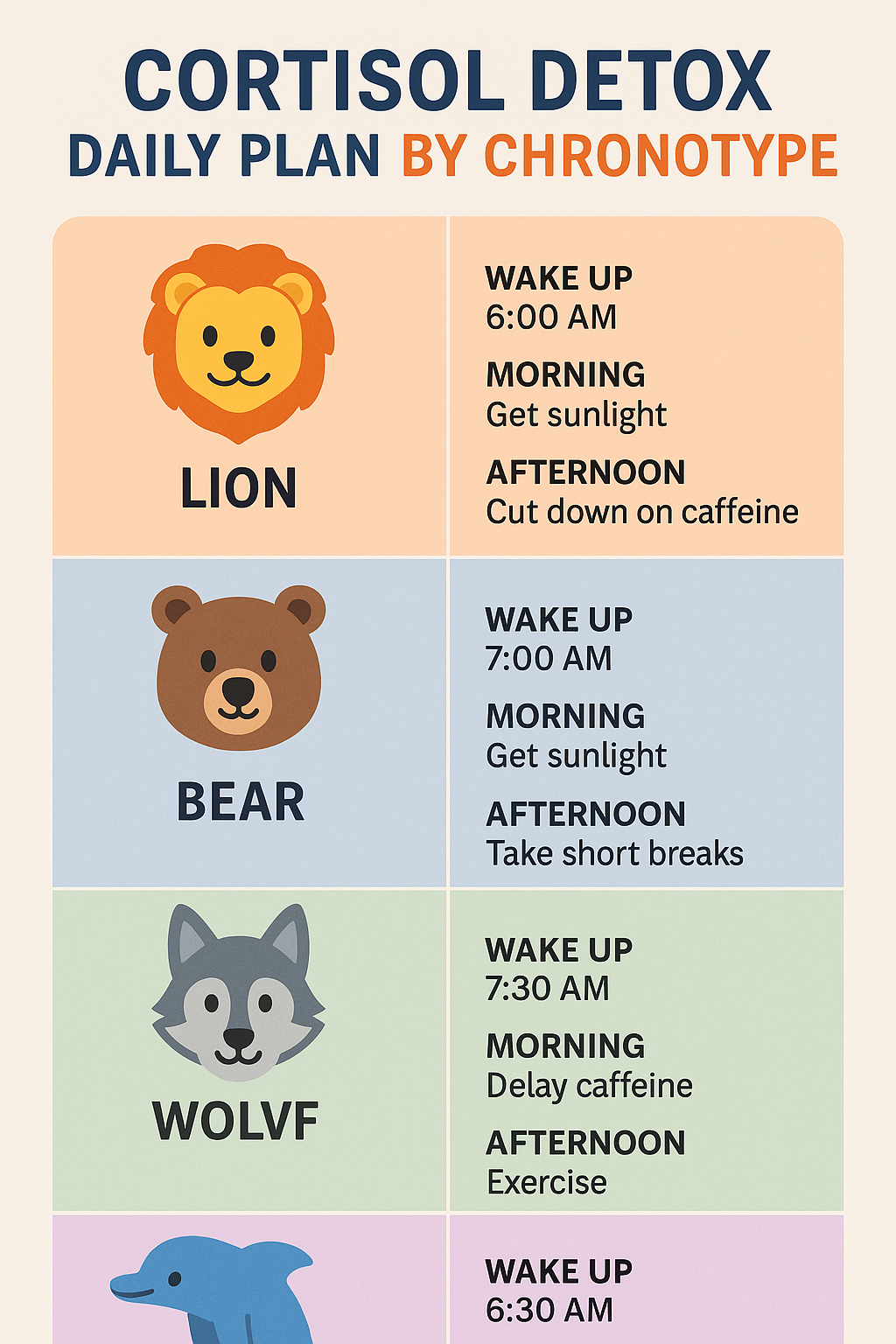
    Cortisol Detox by Chronotype: A Personalized Approach to Reducing Stress and Boosting Health

    Have you ever wondered why some people thrive early in the morning while others hit their stride well into the evening? This isn’t just about personal preference—it’s rooted in your chronotype, your body’s natural sleep-wake rhythm. Understanding your chronotype can transform your energy levels, stress response, and overall health when paired with cortisol management. This blog explores how a cortisol detox tailored to your chronotype can help you feel balanced and recharged.

    Read Also: Early Signs of Iron Deficiency in Women: Symptoms, Causes, and What You Need to Know

    Cortisol detox by chronotype

    What Is Cortisol and Why Does It Matter?

    Cortisol is often dubbed the “stress hormone.” It plays a vital role in regulating your metabolism, blood pressure, and immune system—and most importantly, it helps you respond to stress. Naturally, cortisol peaks in the early morning to help you wake up and slowly declines throughout the day.

    However, chronic stress, poor sleep, and irregular habits can throw this natural rhythm off balance, leading to issues like:

    • Fatigue
    • Weight gain
    • Insomnia
    • Mood swings
    • Weakened immunity

    A cortisol detox isn’t about flushing the hormone out of your system (your body needs it). It’s about restoring balance and preventing chronic overstimulation by aligning your habits with your body’s chronobiology—your unique circadian rhythm.

    What Is a Chronotype?

    Your chronotype determines when your body naturally wants to sleep, eat, and be active. According to sleep specialist Dr. Michael Breus, there are four primary chronotypes:

    1. Lion – Early risers, peak productivity in the morning, and fade by evening.
    2. Bear – The most common type, aligned with the sun. Energy peaks mid-morning to early afternoon.
    3. Wolf – Night owls. Struggle in the morning, but energised late afternoon and evening.
    4. Dolphin – Light sleepers with irregular patterns. Often anxious and hyper-aware.

    Understanding your chronotype allows you to time key activities like caffeine intake, exercise, and wind-down rituals to better support healthy cortisol cycles.

    Read Also: How Cutting Out Sugar Speeds Up Weight Loss: The Science, Benefits, and Sustainable Tips for Beginners

    Cortisol Detox Strategies by Chronotype

    🦁 Lions (Early Risers)

    • Cortisol Peak: Early morning
    • Challenge: Energy crashes in the afternoon
    • Detox Tips:
      • Engage in light morning workouts (e.g., walking or yoga)
      • Avoid caffeine after 10 a.m.
      • Power nap or relax during afternoon slumps
      • Use calming evening rituals to aid sleep (e.g., herbal tea, journaling)

    🐻 Bears (Solar Synced)

    • Cortisol Peak: Mid-morning
    • Challenge: Energy wanes if the routine is disrupted
    • Detox Tips:
      • Stick to a consistent wake-sleep cycle
      • Take screen breaks throughout the day to avoid overstimulation
      • Avoid late meals or alcohol before bed
      • Practice mindfulness during lunch or short walks in nature

    🐺 Wolves (Night Owls)

    • Cortisol Peak: Late afternoon or evening
    • Challenge: Groggy mornings, alert late at night
    • Detox Tips:
      • Delay caffeine until at least 10 a.m.
      • Use a sunrise alarm to wake gradually
      • Schedule workouts in the evening
      • Avoid doomscrolling late at night—use blue light blockers

    🐬 Dolphins (Light Sleepers)

    • Cortisol Pattern: Irregular, often triggered by anxiety
    • Challenge: Poor sleep quality, overthinking
    • Detox Tips:
      • Follow strict sleep hygiene (no screens 1 hour before bed)
      • Try meditation or progressive muscle relaxation at night
      • Limit stimulants like sugar and caffeine
      • Use a weighted blanket or calming music to reduce anxiety

    Universal Cortisol Detox Habits (Good for All Chronotypes)

    Regardless of your chronotype, these strategies can support healthy cortisol levels:

    Read Also: Clear Nasal Congestion with Bay Leaves: The Power of Bay Leaves

    • Get early sunlight exposure – Signals your body to regulate cortisol naturally
    • Eat a balanced breakfast – With protein and healthy fats to stabilize blood sugar
    • Limit sugar and processed foods – Reduce cortisol spikes
    • Exercise daily – Choose the right time based on your chronotype
    • Prioritize restorative sleep – Stick to a regular schedule
    • Practice stress-reducing activities – Meditation, deep breathing, or nature walks

    Final Thoughts: Honour Your Rhythm, Heal Your Stress

    You don’t need a one-size-fits-all routine to manage stress. Instead, aligning your daily habits with your chronotype helps you work with your body, not against it. By doing so, your cortisol levels naturally stabilise, leading to better sleep, less anxiety, and a more productive day.

    So, whether you’re a lion rising with the sun or a wolf who thrives under moonlight, your cortisol detox starts with knowing your rhythm.

  • 10 Interesting Things That Happen to Your Body While You’re Asleep

    10 Interesting Things That Happen to Your Body While You’re Asleep

    Sleep is one of the most important parts of our lives. It is designed by nature to rest the body. On average, we spend 1/3 of our lives sleeping, so it should be of great importance to us. When you sleep, a number of interesting things happen to your body, which is what we will discuss today. These happenings mostly help us maintain our overall health and well-being. From repairing muscles to consolidating memories, sleep plays a crucial role in keeping you functioning at your best. Here are ten interesting things that happen to your body while you’re asleep.

    1. Your Brain Clears Out Toxins

    Things that happen to your body while you're asleep

    One of the most remarkable things that happens to your body while you’re asleep is the brain’s self-cleaning process. The glymphatic system, a waste clearance mechanism, becomes highly active during deep sleep. It flushes out toxins and metabolic waste, including beta-amyloid, a protein linked to Alzheimer’s disease. This nightly detox helps keep your brain sharp and may reduce the risk of neurodegenerative disorders.

    2. Your Muscles and Tissues Repair Themselves

    Ever wonder why you feel rejuvenated after a good night’s sleep? This is partly because your body enters repair mode during rest. Human Growth Hormone (HGH), which is essential for tissue growth and muscle repair, is released primarily during deep sleep. This process helps heal wounds, build muscle, and regenerate cells, making sleep crucial for athletes and anyone recovering from injury.

    Read Also: 5 Ultimate Stretches You Should Do Every Morning

    3. Your Heart Rate and Blood Pressure Drop

    As you fall into non-REM (Rapid Eye Movement) sleep, your heart rate and blood pressure decrease. This nightly dip, known as nocturnal dipping, gives your cardiovascular system a much-needed break. Consistent, quality sleep can reduce the risk of heart disease and stroke by allowing your heart to recover and function more efficiently.

    4. Your Immune System Strengthens

    A lesser-known thing that happens to your body while you’re asleep is the immune boost you receive. Sleep enhances the production of cytokines, proteins that help fight infection and inflammation. This explains why getting enough rest can speed up recovery from illness and why sleep deprivation can leave you more susceptible to colds and other infections.

    5. Your Body Temperature Drops

    During sleep, your body undergoes thermoregulation, lowering your core temperature by one to two degrees. This drop helps conserve energy and signals to your body that it is time to rest. Cooler body temperatures are associated with deeper, more restorative sleep, which is why a cool room often promotes better sleep quality.

    6. You Experience Hormonal Fluctuations

    Hormonal activity surges during the night. Melatonin, the hormone responsible for regulating sleep-wake cycles, peaks during darkness, promoting restful sleep. Cortisol, the stress hormone, drops in the evening but begins to rise in the early morning, preparing your body to wake up. These hormonal shifts are essential for maintaining balance and ensuring proper metabolic function.

    7. Your Digestive System Slows Down

    While you’re asleep, your digestive system enters a state of reduced activity. This allows your body to divert energy to other critical processes, such as cellular repair and memory consolidation. However, this doesn’t mean digestion stops entirely—it simply operates at a slower pace, which is why eating heavy meals late at night can disrupt sleep.

    8. Your Memories Consolidate

    A crucial cognitive process that happens to your body while you’re asleep is memory consolidation. During REM sleep, your brain processes and organizes information gathered throughout the day. This strengthens neural connections, improves learning, and enhances problem-solving skills. Sleep is often referred to as “brain food” because of its pivotal role in memory retention and mental clarity.

    9. You May Experience Sleep Paralysis

    Sleep paralysis is a phenomenon where you become aware of your surroundings but are temporarily unable to move. This occurs during REM sleep when your brain temporarily disconnects motor functions to prevent you from acting out your dreams. Although it can be unsettling, sleep paralysis is generally harmless and lasts only a few seconds to minutes.

    10. You Cycle Through Different Sleep Stages

    Throughout the night, you cycle through various stages of sleep, including light sleep, deep sleep, and REM sleep. Each cycle lasts about 90 minutes, with four to six cycles occurring during a full night’s rest. These stages are crucial for different aspects of physical and mental recovery, ensuring you wake up feeling refreshed and alert.

    Read Also: 5 Benefits of Rinsing Your Face with Cold Water in the Morning

    Why Understanding Sleep Matters

    Understanding the fascinating things that happen to your body while you’re asleep highlights the importance of prioritizing rest. Sleep isn’t just a passive state but an active and essential process that affects nearly every aspect of your health. From boosting immunity to enhancing cognitive function, the benefits of sleep are far-reaching and vital for overall wellbeing.

    If you ever needed another reason to aim for those coveted seven to nine hours of rest each night, consider the intricate and essential processes occurring behind the scenes. Embracing good sleep hygiene and respecting your body’s need for rest can unlock a healthier, happier life. So, the next time you tuck yourself into bed, remember that remarkable things are happening while you sleep.

    Read More ABout Sleep Here : Are You Sure You Have to Sleep for 8 Hours? 10 Facts About Sleep that You Did Not Know

    Kindly Follow My Social Media Pages:

    Facebook : @Infohealthgh

    Twitter: @Infhealth