Author: kwamebrew

  • Do you know the Benefits of Fluted pumpkin leave, also called Krobonko in Ghana?

    Do you know the Benefits of Fluted pumpkin leave, also called Krobonko in Ghana?

    If you’ve ever walked through a Ghanaian market or tasted a bowl of rich, green vegetable soup, you may have come across this amazing leafy vegetable without even knowing its full potential. Fluted pumpkin leaves—popularly known as Krobonko—are more than just an everyday ingredient. They are a nutritional powerhouse, a medicinal plant, and a wellness booster that many people underestimate.

    Benefits of Fluted pumpkin leave

    In Ghana and across West Africa, Krobonko is a staple ingredient in soups, stews, and herbal preparations. For generations, it has been used not only for its taste but for its incredible health benefits. Today, more people are beginning to appreciate the numerous Benefits of Fluted pumpkin leaves, and it’s easy to see why.

    In this article, we’ll break down the nutritional richness of this leafy vegetable and explore how adding Krobonko to your meals can improve your health in remarkable ways.

    Read Also: Foods You Should Avoid Reheating (They Can Turn Harmful)

    What Are Fluted Pumpkin Leaves (Krobonko)?

    Fluted pumpkin leaves come from the fluted pumpkin plant, scientifically known as Telfairia occidentalis. Although it’s widely cultivated in Nigeria, the plant is also grown and consumed in Ghana, where it’s called Krobonko. The leaves are dark green, slightly bitter, and tender when cooked. They are commonly used in soups like ebunuebunu, vegetable stews, and herbal teas.

    What makes Krobonko special is its unique nutritional profile. The leaves are loaded with:

    • Iron
    • Potassium
    • Calcium
    • Vitamins A, C, and E
    • Protein
    • Antioxidants

    This combination makes it one of the most nutrient-dense vegetables you can add to your diet.

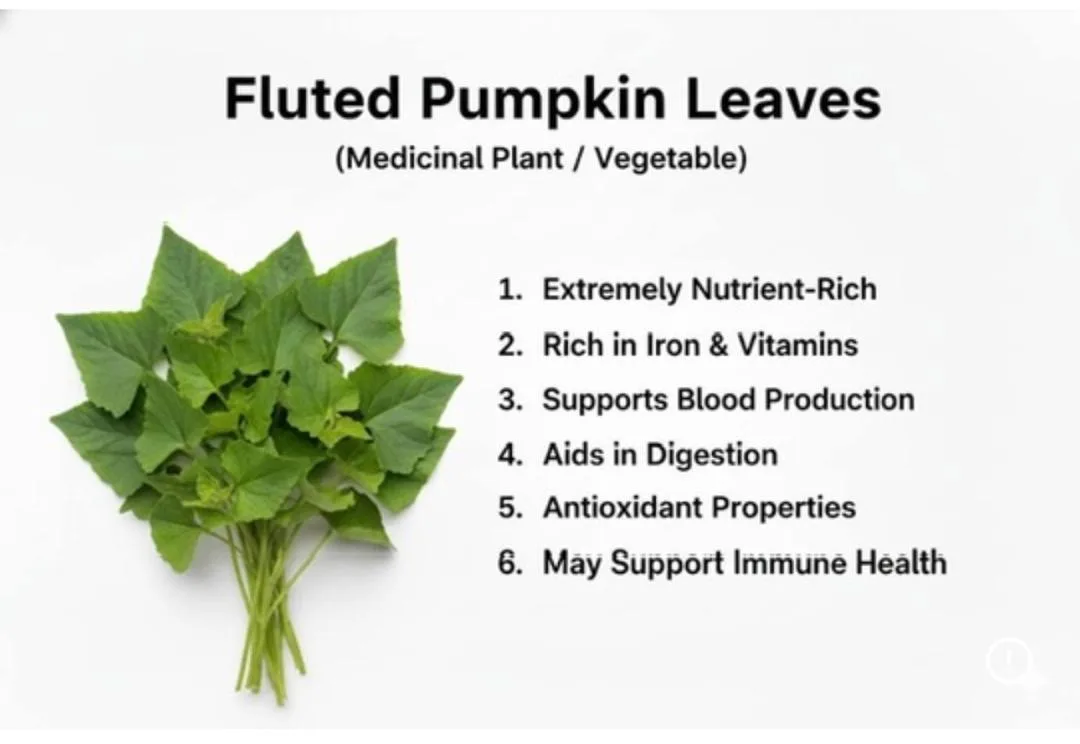
    1. Extremely Nutrient-Rich

    Benefits of Fluted pumpkin leave

    One of the biggest Benefits of Fluted pumpkin leaves is its exceptional nutrient density. A small serving provides a wide range of vitamins and minerals that the body needs daily.

    • Vitamin A supports vision and skin health.
    • Vitamin C boosts immunity and supports collagen production.
    • Iron aids in blood formation and prevents anaemia.
    • Calcium strengthens bones and teeth.
    • Potassium helps regulate blood pressure.

    Many vegetables lose their nutrients when cooked for long, but Krobonko retains most of its nutritional content even after boiling or steaming. It’s a great way to enhance the nutritional quality of any meal.

    2. Rich in Iron and Vitamins

    If you struggle with low iron levels, fatigue, or dizziness, Krobonko is one vegetable you should consider adding to your meals more often. This is why nursing mothers, pregnant women, and individuals managing anaemia are frequently encouraged to eat it.

    The natural iron content in the leaves helps support red blood cell formation and improve oxygen circulation throughout the body. The vitamins work together to support metabolism, protect cells from damage, and keep your system functioning optimally.

    It’s no surprise that one of the most celebrated Benefits of Fluted pumpkin leave is its ability to nourish and energize the body from within.

    Read Also: Ovulation Calculator for Ghanaian Women: Track Your Fertile Days Easily With Our Free Tool

    3. Supports Blood Production

    Traditional African medicine has long used Krobonko leaves to boost blood count. Scientific research now supports this practice.

    The leaf is known for its blood-building properties, making it effective for:

    • Treating mild anaemia
    • Recovering from blood loss
    • Strengthening overall vitality
    • Supporting women after childbirth

    Many people drink Krobonko juice—made by blending the fresh leaves with water—as a natural tonic for improved blood health.

    This makes the Benefits of Fluted pumpkin leaves especially important for children, women, and anyone who feels consistently weak or tired.

    4. Aids Digestion

    If your digestive system needs a reset, Krobonko may be exactly what you need. The leaves contain natural fibre that helps:

    • Promote healthy digestion
    • Prevent constipation
    • Cleanse the gut
    • Support healthy bowel movements

    Fibre is essential for maintaining a healthy digestive tract, and Krobonko provides a generous amount. Including it in your meals can help balance your digestive system while improving nutrient absorption.

    Benefits of Fluted pumpkin leave

    5. Powerful Antioxidant Properties

    Fluted pumpkin leaves are rich in antioxidants—substances that fight harmful free radicals in the body. Free radicals contribute to aging, chronic diseases, and cellular damage. By consuming foods with antioxidant compounds, you support your body’s ability to repair, protect, and rejuvenate itself.

    The antioxidants in Krobonko:

    • Reduce inflammation
    • Support liver health
    • Improve skin glow
    • Strengthen immunity
    • Enhance overall wellness

    This is one of the lesser-known Benefits of Fluted pumpkin leaves, but it’s also one of the most important for long-term health.

    Read Also: Top 5 Worst Sleeping Positions for Your Spine According to Experts (And How to Fix Them)

    6. Boosts the Immune System

    Your immune system is your first defence against infections—and Krobonko helps keep it strong. With its blend of vitamins, minerals, and antioxidants, these leaves serve as a natural immune booster.

    Regular consumption may help reduce your risk of:

    • Common colds
    • Infections
    • Fatigue
    • Inflammation

    This is why many herbal teas and home remedies for recovery include Krobonko as a key ingredient.

    The Benefits of Fluted pumpkin leaves for immunity are especially helpful for children, adults with weak immune systems, and people recovering from illness.

    How to Enjoy Krobonko (Fluted Pumpkin Leaves)

    You can enjoy Krobonko in many tasty and healthy ways:

    • Add it to soups like light soup or vegetable soups.
    • Blend it into smoothies or juices for a nutrient boost.
    • Stir it into stews, yam porridge, or palava sauce.
    • Steam lightly with spices for a simple side dish.

    Always wash thoroughly and cook lightly to preserve its nutrients.

    Read Also: Is Soursop Good for Fatty Liver? Benefits, Risks & Expert Insights

    Final Thoughts

    Krobonko, our beloved fluted pumpkin leaves offer more nutritional and medicinal value than most people realize. The numerous Benefits of Fluted pumpkin leaves make it a must-have ingredient in your kitchen, especially if you’re looking to improve your health naturally.

    From boosting blood production to strengthening your immunity, improving digestion, and providing essential vitamins, this humble vegetable is truly a gift from nature.

    So the next time you prepare a meal, remember to add some Krobonko and enjoy the incredible health benefits packed in every leaf.

  • Foods You Should Avoid Reheating (They Can Turn Harmful)

    Foods You Should Avoid Reheating (They Can Turn Harmful)

    When it comes to what you put in your mouth as food, it is essential to ensure that it is wholesome because there is a thin line between poison and food. Reheating food might look like something normal. In fact, it is. However, there are certain foods that you should avoid reheating.

    Our world is fast-paced, and there is little time to do the very things that are of the utmost importance to us. It makes sense to reheat certain foods as a matter of convenience. Because we won’t always get time to prepare a fresh meal whenever we want to eat. Personally, I like to prepare my stews and soups over the weekend to serve me throughout the week. I do this because it is easy and fits well into my schedule.

    For many of us, this is our routine, and it isn’t bad at all. However, there are some factors we need to consider and precautionary measures necessary to be taken. On that note, let us delve into

    ‎Follow the InfoHealthGh channel on WhatsApp: https://whatsapp.com/channel/0029Va7j1SgGE56e8pagc22u

    Foods You Should Avoid Reheating

    1. Rice

    I know you didn’t expect this, but heating rice improperly, especially when it retains too much moisture, can cause Bacillus cereus, a bacterium that survives cooking and grows when rice sits out too long.

    Maybe you cooked more than you could eat and thought it best to heat it and leave it on the kitchen counter, and continue tomorrow. This is a bad idea because Bacillus cereus thrives best in temperatures ranging from 20–40 °C (room temperature to warm conditions).

    Read Also: The Anti-Inflammatory Food Guide: What to Eat, What to Avoid, and How to Flush Inflammation Fast

    These bacterial pores multiply so fast that leaving the rice to cool just for a few hours poses such risks, even if you freeze it after. You might think refrigeration might be the solution; unfortunately, it only slows growth, but inadequate cooling or reheating can still pose risks. You know your rice is contaminated when you experience Severe vomiting, Diarrhoea, and “Fried Rice Syndrome”

    The best thing you can do is to eat what you cook hot. This is how Bacillus cereus looks under a microscope.

    2. Chicken

    Chicken is one of those foods that tastes even better the next day, but reheating it carelessly can turn it into a digestive nightmare. This isn’t to scare you — it’s simply the reality of how chicken behaves when it cools and gets reheated over and over again.

    Chicken contains dense proteins that change structure when exposed to fluctuating temperatures. When you heat it, cool it, and heat it again, these proteins harden in a way that makes the chicken difficult to digest. This explains why sometimes after eating leftover chicken, you feel bloated, uncomfortable, or strangely full even when you didn’t eat much.

    The more concerning issue, however, is bacteria growth. Maybe you cooked chicken in the evening, ate some, and left the rest on the table because you were tired. By the time you wake up, bacteria such as Salmonella or Campylobacter may have already multiplied. And no — reheating to “very hot” doesn’t always fix the problem. Some toxins remain active even after heating.

    Read Also: 21 Brain-Boosting Foods That Sharpen Focus, Memory & Mental Clarity

    If you experience stomach cramps, diarrhoea, or nausea after eating reheated chicken, your body is simply reacting to the changes the chicken has undergone or the bacteria it picked up while cooling.

    The safest approach? Eat your chicken fresh or refrigerate it immediately after cooling. And if you must reheat it, do it only once and make sure it’s steaming hot all the way through.

    3. Eggs

    This one surprises a lot of people because eggs are widely considered safe, simple, and harmless. But reheating eggs , especially boiled or fried eggs can introduce more problems than you might imagine.

    Eggs are rich in delicate proteins that react quickly to heat. When eggs are reheated, these proteins can break down into compounds that are harder for the stomach to handle. This is why leftover egg stew or that boiled egg you try to warm up in the microwave can sometimes result in bloating or a strange discomfort in your stomach.

    The bigger issue is bacteria growth. Once eggs are cooked and left out, their moisture content and nutrient richness make them a perfect environment for bacteria to multiply. By the time you reheat it, the damage might already be done — and no amount of extra microwaving will reverse bacterial toxins.

    If you’ve ever had reheated eggs and ended up with a sour stomach or loose stool shortly after, now you know why. The safest option is to eat eggs fresh and avoid reheating them entirely.

    4. Kontomire (Spinach)

    If you are Ghanaian, kontomire is a household favourite. Whether it’s stew, yams and kontomire, or abom, it’s part of our culture. But reheating kontomire repeatedly is something you should avoid, and here’s why.

    Read Also: 10 Foods Your Doctor Will Tell You to Avoid If You Have High Blood Pressure and Why

    Leafy greens such as spinach and kontomire contain naturally occurring compounds called nitrates. These compounds are harmless in their fresh state, but when exposed to heat multiple times, they convert into nitrites, and then into nitrosamine substances linked to harmful health effects over long-term exposure.

    To put it simply, that kontomire stew you keep warming every day may not be as harmless as you think.

    A second issue is oxidation. Kontomire is often cooked with palm oil, tomatoes, and spices. Reheating these oils repeatedly causes them to break down into free radicals, which stress your body at the cellular level.

    You might not notice anything immediately, but over time, this can contribute to inflammation and digestive discomfort.

    If you want to enjoy kontomire safely, cook what you can finish, or store it properly and warm it only once. Also, you can portion the stew into smaller sizes and keep it in the freezer such that you only heat the small quantity you need and finish it.

    5. Potatoes

    Potatoes may seem harmless. After all, they’re just carbs, right? But they behave differently from other foods when they cool down and are reheated.

    Cooked potatoes left at room temperature for too long can develop Clostridium botulinum, the same bacteria responsible for botulism. Even though rare, it’s something worth paying attention to because the effects are severe.

    This usually happens when you cook potatoes, leave them to cool on the stove, forget about them, and then warm them the next day. Even if you don’t get sick immediately, some people experience nausea, vomiting, or dizziness after reheating poorly stored potatoes.

    Potatoes also lose their texture and nutritional quality when reheated, becoming mushy, heavy, or oddly sweet.

    To be safe, refrigerate potatoes shortly after cooking and avoid reheating them multiple times.

    6. Oily Stews (Palm Oil Stew, Shito, and Groundnut Soup)

    Now, this one hits home because most Ghanaian households love their stews. But reheating oily stews over and over again is something we rarely think twice about — even though it comes with hidden risks.

    When oils such as palm oil, vegetable oil, or groundnut paste are reheated repeatedly, they oxidise and form harmful compounds known as free radicals. These compounds place unnecessary stress on your organs and can affect your digestive system.

    Read Also: 10 Best Foods to Boost Nitric Oxide Naturally for Better Circulation & Heart Health

    If you’ve ever noticed that reheated stew tastes slightly more acidic or gives you mild heartburn, it is often because the oil has changed composition after multiple heat cycles.

    This doesn’t mean you shouldn’t enjoy your stews; it simply means you should warm only what you need and avoid heating the entire pot every time.

    7. Fish (Especially Oily Fish Like Mackerel, Tuna, or Salmon)

    Functional Foods

    Fish is a fantastic source of healthy fats and proteins, but reheating oily fish too many times destroys its quality and introduces problems most people never think about.

    Oily fish contain omega-3 fatty acids — healthy when fresh, but when reheated repeatedly, these fats break down into oxidised compounds that may trigger inflammation.

    If you’ve ever eaten reheated fish and felt a headache, bloating, or slight nausea afterwards, it’s not in your head. It’s your body responding to the altered fats.

    Fish is also extremely sensitive to bacteria, especially when left out after cooking. Reheating might make it hot, but it won’t eliminate the toxins that form when it has been stored poorly.

    For best results, store fish properly, and if you must reheat it, do it only once.

    Now you know the Foods You Should Avoid Reheating. This isn’t meant to scare you away from eating your favourite meals, but to enlighten you to take precautions when preserving them or handling them. Infohealthgh, being Ghana’s biggest health and lifestyle blog, will keep you updated with more health tips.

    Kindly Join My WhatsApp channel if you enjoyed this post.

    ‎Follow the InfoHealthGh channel on WhatsApp: https://whatsapp.com/channel/0029Va7j1SgGE56e8pagc22u

  • Ovulation Calculator for Ghanaian Women: Track Your Fertile Days Easily With Our Free Tool

    Ovulation Calculator for Ghanaian Women: Track Your Fertile Days Easily With Our Free Tool

    Many Ghanaian women struggle to know the exact time they are most fertile, especially when their menstrual cycles change from month to month. Whether you’re trying to conceive or simply want to understand your body better, tracking ovulation is one of the most important habits for Ghana Women’s Health. In this guide, you’ll learn how ovulation works, how to calculate it naturally, and how to use our Ghana Ovulation Calculator—a simple tool designed to give you instant results.

    Ovulation & Fertility Tracker

    What Is Ovulation?

    Ovulation is the point in your menstrual cycle when your ovary releases a mature egg. This usually happens once every month and is the window where pregnancy is most likely to occur. After release, the egg survives for about 12–24 hours, waiting to be fertilized. Understanding this timing is the first step to taking control of your reproductive health.

    Read Also: Bↄdze and the Myth of Delayed Childbirth

    How to Calculate Your Ovulation Naturally

    Most women in Ghana have menstrual cycles between 26–32 days. To estimate your ovulation:

    • Count the first day of your period as Day 1
    • Ovulation usually occurs 14 days before your next period
    • Example:
      • If your cycle is 28 days → ovulation happens around Day 14
      • If your cycle is 30 days → ovulation happens around Day 16

    This method works best if your cycle is regular. If it’s not, using the calculator below gives a clearer estimate.

    Why Tracking Ovulation Matters

    Tracking ovulation is important for several reasons:

    • Cycles can be affected by stress, long working hours, diet, and lifestyle
    • Access to fertility specialists can be limited for many women
    • Knowing your fertile window helps with family planning
    • It empowers women with knowledge about their bodies

    This is why many consider tools like ours among the Best Ovulation Calculator options for Ghanaian women—simple, free, and accessible.

    Use Our Free Ovulation Calculator Below

    Our Ghana Ovulation Calculator makes it easy to know your most fertile days.
    Just enter the first day of your last period and your usual cycle length to get:

    • Estimated ovulation date
    • Fertile window (your highest chance of getting pregnant)
    • Expected next period

    👇 Scroll down and use the ovulation calculator below to get your instant results.

    Ovulation & Fertility Tracker

    How Accurate Is an Ovulation Calculator?

    An ovulation calculator gives an estimate, not a perfect prediction. Accuracy may vary if you have:

    • Irregular periods
    • Polycystic ovarian syndrome (PCOS)
    • Hormonal imbalance
    • Recent pregnancy or miscarriage
    • High stress levels

    However, it remains one of the simplest and most reliable tools to guide your timing, especially if combined with physical signs.

    Read Also: 10 Natural Ways to Sleep Better Without Pills

    Signs You’re Ovulating (Common Among Ghanaian Women)

    Here are common ovulation symptoms to look for:

    • Clear, stretchy discharge (egg-white consistency)
    • Mild lower abdominal pain or cramps
    • Increased sex drive
    • Breast tenderness
    • Slight rise in body temperature
    • Improved sense of smell or taste

    If you pay attention to these symptoms while using the calculator, your estimates become even more accurate.

    Tips to Increase Your Chances of Getting Pregnant

    If you’re trying to conceive, here are medically backed tips:

    • Track your period every month
    • Have intercourse every 2–3 days during your fertile window
    • Maintain a healthy weight
    • Reduce stress
    • Cut down on alcohol and smoking
    • Eat more fruits, vegetables, and water-rich foods
    • Take folic acid and basic prenatal vitamins

    These habits support fertility and overall Ghana Women’s Health.

    When to See a Doctor in Ghana

    Visit a hospital or specialist if:

    • You’ve been trying to conceive for 12 months without success
    • You have very irregular periods
    • You experience severe menstrual pain
    • You suspect hormonal issues
    • You are over 35 and have tried for 6 months

    Some trusted fertility centres and hospitals in Ghana include:

    • Korle-Bu Teaching Hospital
    • Komfo Anokye Teaching Hospital
    • Lister Hospital
    • Finney Hospital
    • Medifem Hospital

    Always consult a professional when unsure.

    Read Also: How to Lose Belly Fat with Common Ghanaian Ingredients

    Conclusion

    Understanding your fertile window can make a huge difference, whether you’re planning a pregnancy or simply tracking your cycle. Our free Ghana Ovulation Calculator is designed to help you track your ovulation quickly and accurately. Bookmark this page, check your cycle regularly, and encourage other women to use the ovulation calculator to take charge of their reproductive health.

  • Top 5 Worst Sleeping Positions for Your Spine According to Experts (And How to Fix Them)

    Top 5 Worst Sleeping Positions for Your Spine According to Experts (And How to Fix Them)

    Most adults blame a long day, a bad chair, or stress for their chronic back pain. But the truth is that one of the biggest culprits is something you do every night without thinking: your sleeping position. The way you arrange your body for 6–8 hours straight can help your spine recover or silently damage it.

    Certain sleep habits can twist your spine out of its natural alignment and trigger morning stiffness, headaches, and long-term back issues. Understanding the worst sleeping positions is one of the most powerful back health upgrades you can make.

    According to experts, the following sleeping positions are damaging your posture and possibly causing you chronic back pain.

    Read Also: 10 Natural Ways to Sleep Better at Night (Without Pills or Melatonin)

    1. Stomach Sleeping With One Knee Raised

    Many people sleep in this position without realising the hidden strain it places on their spine. To some people, that is a more comfortable way of sleeping. Just because it is the most comfortable way for you doesn’t mean it is an ideal way to sleep.

    When you lie on your stomach and lift one knee, your lower back rotates, your hips twist, and your neck is forced to stay turned for hours. Over time, this can lead to persistent low-back pain and stiff necks.

    Fix it: Try transitioning to side or back sleeping. Place a pillow under your lower abdomen if you can’t give up stomach sleeping immediately.

    ‎Follow the InfoHealthGh channel on WhatsApp: https://whatsapp.com/channel/0029Va7j1SgGE56e8pagc22u

    2. Flat Stomach Sleeping

    Even without the raised knee, stomach sleeping remains one of the worst sleeping positions for spinal alignment.

    It flattens the natural curve of your lower back and overstretches the neck, contributing to chronic discomfort. The persistent pain you subject your neck and spine to eventually stays and develops into chronic back pain.

    Fix it: Use a thin pillow or no pillow at all to minimise neck strain, or gradually shift to side sleeping with proper support.

    Read Also: 10 Interesting Things That Happen to Your Body While You’re Asleep

    3. Side Sleeping With the Top Leg Crossing Too Far Forward

    Side sleeping can be healthy, but many people unknowingly do it wrong. When the top leg crosses forward onto the mattress, the pelvis rotates and twists the spine. This subtle misalignment can cause hip and lower-back pain.

    Fix it: Place a pillow between your knees to keep the pelvis level. This is one of the easiest spine alignment tips that instantly improves comfort.

    4. Back Sleeping Without Knee Support

    Sleeping flat on your back isn’t automatically harmful, but without support under the knees, the lumbar spine may arch too much, especially for people with tight hip flexors. This can strain the lower back overnight.

    Fix it: Place a small pillow or rolled towel under your knees to maintain your spine’s natural curve.

    5. Side Sleeping With the Wrong Pillow Height

    Even if your spine is aligned from the waist down, the wrong pillow height can ruin everything from the neck up. A pillow that is too high or too low pushes your head out of alignment with your spine, leading to neck pain, shoulder tension, and headaches.

    Read Also: 7 Natural Teas to Help You Sleep Longer and Better at Night

    The recommended pillow height varies by sleeping position, with side sleepers needing a high loft (5–7 inches), back sleepers a medium loft (4–6 inches), and stomach sleepers a low loft (2–4 inches) or no pillow. To determine the right height, aim for a pillow that keeps your spine neutral, ensuring your head and neck are in a straight, aligned position, taking into account your body type and mattress firmness. 

    Fix it: Choose a pillow that keeps your head level with your spine. When lying on your side, your nose should be in line with the centre of your chest.

    The Key to Healthy Sleep Posture

    Getting the most out of your sleep isn’t just about going to bed early and clocking in those 6 to 8 hours recommended sleep, but how you actually position yourself in the comfort of your bed determines if you benefit from your sleep or wake up to the dreaded waist pain that most adults suffer.

    By adhering to this guide and avoiding these 5 Worst Sleeping Positions for Your Spine, your sleep quality and general well-being will significantly improve.

  • 10 Best Foods to Boost Nitric Oxide Naturally for Better Circulation & Heart Health

    10 Best Foods to Boost Nitric Oxide Naturally for Better Circulation & Heart Health

    What Is Nitric Oxide and Why Does It Matter

    Nitric oxide (NO) is a molecule your body produces to help blood vessels relax and widen. This simple chemical reaction has powerful effects, improving circulation, lowering blood pressure, and enhancing exercise performance.

    Your body makes nitric oxide (NO) in two main ways. The first method involves the L-arginine pathway. In this process, an enzyme called nitric oxide synthase (NOS) converts the amino acid L-arginine into NO. The second is the nitrate pathway. Nitrates from foods like leafy greens are turned into nitrites by bacteria in your mouth. These nitrites are then converted into NO in your stomach or bloodstream. Exercise and nasal breathing also boost NO production by helping your blood vessels relax and improving overall circulation.

    Read Also: Why Your Headache Keeps Coming Back — And When It Could Be Linked to Kidney Disease

    As we age, nitric oxide levels naturally decline, leading to stiffer arteries and reduced oxygen delivery. Nitric oxide helps with blood circulation. A deficiency can expose your body to high blood pressure and erectile dysfunction. Other detrimental effects include lowered concentration and even memory loss.

    Before you start panicking, there is good news. You can boost nitric oxide naturally through certain foods that support your body’s own production process.

    Here are the 10 best foods to boost nitric oxide and keep your heart and blood flow in top shape.

    1. Beets

    Beets are one of the most potent natural sources of nitric oxide. They’re rich in nitrates, which convert into nitric oxide in your body. There have been studies conducted to establish the link between drinking beet juice and improved workout performance. The results are exceptional.

    What are the benefits of consuming beet?

    • Improves blood flow and oxygen delivery
    • Lowers blood pressure
    • Enhances stamina and endurance during workouts

    2. Garlic

    Garlic contains compounds like allicin that activate nitric oxide synthase, the enzyme responsible for producing nitric oxide. To see the maximum results, it is recommended that you consume it raw as a dressing, sauce or roasted veggies.

    Benefits:

    • Supports healthy blood pressure
    • Improves artery flexibility
    • Boosts immune health

    Read Also: Medical and Natural Remedies to Get Rid of Stretch Marks.

    3. Lean Meats & CoQ10-Rich Foods

    Beef, chicken, and fatty fish contain Coenzyme Q10 (CoQ10), a compound that supports nitric oxide preservation and mitochondrial energy. Choose grass-fed or wild-caught sources for cleaner nutrition.

    Benefits:

    • Helps maintain nitric oxide levels
    • Supports heart function and energy metabolism
    • Reduces oxidative stress in blood vessels

    4. Dark Chocolate

    Dark chocolate (70% cocoa or higher) contains flavanols that stimulate nitric oxide production in the endothelium (the lining of blood vessels).

    Benefits:

    • Enhances blood flow to the heart and brain
    • Supports cognitive function
    • Satisfies sweet cravings healthily

    A small square or two per day is enough, but remember to keep it in moderation.

    Read Also: Increased Risk of Cancer Amongst Younger People

    5. Leafy Greens

    Spinach, kale, arugula, and Swiss chard are packed with nitrates, magnesium, and antioxidants that boost nitric oxide naturally.

    Benefits:

    • Promotes healthy circulation
    • Helps maintain balanced blood pressure
    • Supports energy and oxygen use during exercise

    These greens are most potent when eaten raw or lightly steamed.

    6. Citrus Fruits

    Oranges, lemons, and grapefruits are rich in vitamin C, which protects nitric oxide molecules from breakdown.

    Benefits:

    • Prolongs nitric oxide activity in the body
    • Strengthens capillary walls
    • Enhances skin and immune health

    Try citrus water or a fresh fruit salad to get your daily dose.

    7. Pomegranate

    Pomegranates increase nitric oxide by reducing oxidative stress and protecting NO from damage. This fruit is not just for boosting nitric oxide levels; it also promotes heart health, has anti-inflammatory properties, and may protect against certain cancers and age-related cognitive decline.

    Benefits:

    • Improves artery flexibility
    • Supports blood flow to the heart and muscles
    • Boosts recovery after exercise

    Enjoy fresh pomegranate seeds or pure juice (without added sugar).

    8. Nuts & Seeds

    Almonds, walnuts, flaxseeds, and chia seeds are high in arginine, an amino acid your body uses to create nitric oxide. Next time you prepare a bowl of salad, oatmeal, or smoothies, make sure to sprinkle some of these seeds on it to boost your health and well being.

    9. Watermelon

    Watermelon contains L-citrulline, a precursor that converts to arginine, fueling nitric oxide production.

    Benefits:

    • Enhances blood vessel function
    • Supports athletic endurance
    • Helps maintain healthy blood pressure

    Fresh watermelon juice is a great pre- or post-workout drink.

    Read Also: How to deal with sore muscles after an intense workout.

    10. Red Wine (in Moderation)

    Red wine’s polyphenols, particularly resveratrol, stimulate nitric oxide synthesis and protect against arterial damage. Remember to take in moderation because too much alcohol will definitely kill you.

    Benefits of Taking Red Wine in Moderation:

    • Promotes circulation and vascular health
    • May support longevity when consumed moderately
    • Adds antioxidants that protect the heart

    Limit to one glass per day for women, two for men — moderation is key.

    Summary: Boost Nitric Oxide Naturally for Lasting Health

    Nitric oxide is essential for circulation, heart health, and energy. These foods help your body produce it naturally with no supplements required.

    By eating a variety of nitrate-rich vegetables, antioxidant-dense fruits, and healthy fats, you can improve blood flow, lower blood pressure, and enhance exercise performance safely and effectively.

    Start adding these foods to your meals today for better circulation, heart health, and energy.

    ‎Follow the InfoHealthGh channel on WhatsApp: https://whatsapp.com/channel/0029Va7j1SgGE56e8pagc22u
  • Why Your Headache Keeps Coming Back — And When It Could Be Linked to Kidney Disease

    Why Your Headache Keeps Coming Back — And When It Could Be Linked to Kidney Disease

    why your headaches keep coming back

    We often experience headaches and mostly ignore them. We might just link them to stress or lack of sleep. But have you asked yourself, What if that is your body’s way of telling you something is wrong? In most cases, chronic headaches are connected to very concerning underlying conditions like kidney disease, heart problems, and even digestive issues.

    There is somewhat of some good news, which is that you are not the only one experiencing this. In fact, 1 in 25 adults suffers from chronic headaches. Info Health GH will explore why your headaches keep coming back. They will also examine how it could be linked to your kidneys.

    ‎Follow the InfoHealthGh channel on WhatsApp: https://whatsapp.com/channel/0029Va7j1SgGE56e8pagc22u

    Why Do Headaches Keep Coming Back?

    A headache that keeps returning can have several triggers, ranging from lifestyle habits to hidden medical issues. Some of the most common reasons include:

    Read Also: Early Signs of Iron Deficiency in Women: Symptoms, Causes, and What You Need to Know

    1. Dehydration:
    When your body lacks enough water, your brain temporarily contracts, triggering pain signals. In hot Ghanaian weather, not drinking enough fluids is one of the biggest culprits behind recurring headaches.

    2. Eye Strain and Screen Time:
    Spending hours on your phone, laptop, or TV can put pressure on your eyes. It can also strain your neck muscles. This tension often builds up and causes chronic headaches, especially if you’re not taking breaks.

    3. Stress and Poor Sleep:
    Mental stress tightens the muscles around your head and neck. Combine that with a lack of proper rest, and you have a perfect recipe for frequent headaches.

    4. Caffeine or Medication Overuse:
    Too much caffeine or frequent use of painkillers can actually cause rebound headaches. This means the more you rely on medication, the more likely the headache will come back.

    5. High Blood Pressure:
    Persistent headaches can sometimes signal high blood pressure, a condition that’s also linked to kidney problems.

    While these are common causes, sometimes the pain is linked to something deeper happening inside your body, like your kidneys.

    Read Also: Soursop Leaves: The Magical Underrated Benefits.

    How Are Headaches Linked to Kidney Disease?

    why your headaches keep coming back

    Most people are surprised to learn that kidney disease can cause headaches. The kidneys play a crucial role in filtering waste and balancing fluids in the body. When they’re not working properly, waste products and toxins begin to build up in your blood, which can affect your overall health—including your brain.

    Here’s how kidney disease and its onset trigger headaches:

    1. High Blood Pressure from Poor Kidney Function:
    Damaged kidneys can struggle to regulate blood pressure. When your blood pressure rises too high, it can lead to persistent headaches, dizziness, or even blurred vision.

    2. Toxin Buildup and Poor Blood Flow:
    When waste products aren’t efficiently removed from your body, they can affect your nervous system and cause fatigue, nausea, and head pain.

    3. Electrolyte Imbalance:
    The kidneys help balance important minerals like sodium, potassium, and calcium. When these levels are off, nerve function is affected, which can result in constant or severe headaches.

    Read Also: Feeling Burnt Out? Take This Work-Related Stress Test

    Other Warning Signs of Kidney Disease

    If your headache keeps coming back and you’re experiencing any of these symptoms, it’s a good idea to see a doctor and ask for kidney function tests:

    • Swelling in your face, hands, or feet
    • Fatigue or unusual tiredness
    • Foamy or dark urine
    • Frequent urination, especially at night
    • Loss of appetite or nausea
    • Itchy or dry skin

    These symptoms don’t always mean you have kidney disease, but they are important red flags that shouldn’t be ignored.

    When to See a Doctor

    A headache that doesn’t go away even after rest, hydration, and pain relief could be a sign of an underlying issue. Visit a healthcare provider if your headaches are becoming more frequent, more painful, or come with other symptoms like blurred vision or swelling.

    Ask for simple blood and urine tests. They can quickly show if your kidneys are under stress or if your blood pressure is too high.

    How to Prevent Headaches and Support Your Kidneys

    Small lifestyle changes can make a big difference in both headache prevention and kidney health.

    • Stay hydrated: Drink at least 6–8 glasses of water daily, and increase your intake if you live in hot areas or sweat a lot.
    • Eat balanced meals: Limit processed foods and salt, and include fruits and vegetables rich in potassium and antioxidants.
    • Get enough sleep: Aim for at least 7 hours of quality rest each night.
    • Limit painkillers and caffeine: Overuse can harm both your kidneys and your headache pattern.
    • Check your blood pressure regularly: High blood pressure silently damages the kidneys over time.

    Read Also: Why Am I Always Tired? 10 Hidden Health Causes You Might Be Ignoring

    Final Thoughts

    A headache that keeps coming back may seem like a small issue. However, it can sometimes point to something more serious, such as kidney disease. Listen to your body, make healthy choices, and don’t ignore persistent pain. Early testing and care can make all the difference in protecting your kidneys—and your overall well-being.

    Would you like me to create a Pinterest or Facebook flier for this article too (something minimal and eye-catching to boost clicks)?

  • Is Soursop Good for Fatty Liver? Benefits, Risks & Expert Insights

    Is Soursop Good for Fatty Liver? Benefits, Risks & Expert Insights

    Fatty liver disease is becoming more common in Ghana, largely due to rising cases of obesity, diabetes, and poor diet habits. As people seek natural ways to protect their liver, one tropical fruit often mentioned is soursop known locally as Aluguntugui. But is soursop really good for fatty liver? Let’s explore the science, benefits, and risks behind this popular fruit.

    Read Also: Soursop Leaves: The Magical Underrated Benefits.

    🍈 What is Soursop?

    Is Soursop Good for Fatty Liver

    Soursop (Annona muricata) is a tropical fruit native to West Africa, the Caribbean, and parts of South America. It’s easily recognized by its green spiky skin, soft white flesh, and sweet-sour flavor. Ghanaians enjoy it fresh, in smoothies, or as juice — but beyond taste, soursop is rich in nutrients that support overall health.

    Nutritional highlights of soursop include:

    • Vitamin C (a strong antioxidant)
    • B vitamins (for metabolism and energy)
    • Potassium and magnesium (for heart and liver function)
    • Dietary fiber (for digestion and detoxification)

    These nutrients contribute to its growing reputation as a natural liver cleanser and part of fatty liver natural remedies.

    🌿 Benefits of Soursop for Fatty Liver

    Studies suggest that soursop may offer several benefits for people with fatty liver. Here’s how it helps:

    1. Rich in Antioxidants

    Soursop is packed with antioxidants like vitamin C, phenols, and acetogenins that fight oxidative stress — one of the main causes of liver damage.
    These compounds help neutralise harmful free radicals and may reduce liver inflammation over time.

    2. Reduces Lipid (Fat) Accumulation

    Animal studies have shown that extracts of soursop leaves and pulp can lower cholesterol and triglyceride levels.
    This means soursop could help prevent excess fat buildup in the liver — a major problem in both alcoholic and non-alcoholic fatty liver disease.

    3. Supports Blood Sugar Regulation

    People with fatty liver often struggle with insulin resistance. Soursop’s natural compounds may improve glucose metabolism, helping to balance blood sugar levels and reduce further liver strain.

    4. Promotes Liver Protection

    In some studies, soursop leaf extract has shown protective effects against toxins that damage liver cells. The bioactive compounds appear to strengthen liver enzymes and support the body’s natural detox functions.

    In summary: Soursop for fatty liver may work through a combination of antioxidant defense, fat regulation, and glucose control — all essential in managing liver health.

    Read Also: 5 Working Hacks to Shed Fat Fast: Skip if you can’t be disciplined and consistent.

    ⚠️ Risks and Side Effects

    Is Soursop Good for Fatty Liver

    While soursop has many benefits, overuse or unregulated consumption can be risky.

    Potential side effects include:

    • Liver and kidney toxicity: Large doses of soursop leaf extract have been linked to liver or kidney damage in some studies.
    • Neurological risks: Some research suggests that long-term consumption of soursop, especially from leaves or seeds, may affect nerve function and lead to symptoms similar to Parkinson’s disease.
    • Low blood pressure: Soursop may reduce blood pressure, which could be dangerous for people already taking hypertension medication.

    👉 Important: Always consult a doctor before using soursop for fatty liver or any medical condition. Natural doesn’t always mean harmless.

    ☕ How to Use Soursop Safely

    If you want to enjoy soursop as part of a liver-friendly lifestyle, moderation is key.

    Safe ways to consume soursop:

    • Fresh fruit: Eat ripe soursop 2–3 times per week as part of a balanced diet.
    • Soursop tea for liver health: Use a few dried leaves to make mild tea once a day. Avoid boiling for too long or drinking in excess.
    • Soursop juice: Prepare natural juice without added sugar. Drink occasionally, not daily.

    Who should avoid soursop:

    • Pregnant or breastfeeding women
    • People with kidney or liver problems
    • Those on blood pressure or diabetes medication

    These groups should seek professional medical advice before using soursop or related supplements.

    🔬 Scientific Research on Soursop and Liver Health

    Recent studies provide some support for soursop’s liver benefits — though most are based on animal experiments, not human trials.

    • A 2019 study found that Annona muricata leaf extract reduced liver fat and improved enzyme function in rats with fatty liver disease.
    • Another 2021 study showed that soursop’s antioxidant compounds could protect liver cells from chemical-induced damage.
    • However, human research remains limited, and long-term safety data are still lacking.

    In short, soursop shows promising potential, but more scientific evidence is needed before it can be recommended as a proven treatment for fatty liver.

    Read Also: Truth about Herbal Teas in Ghana: Do they really help you to lose weight?

    ✅ Conclusion: A Balanced View

    So, is soursop good for fatty liver?
    Yes — in moderation, soursop may support liver health due to its antioxidants, fat-lowering effects, and protective properties. However, it should not replace medical treatment or lifestyle changes such as weight control, regular exercise, and reducing alcohol or sugar intake.

    For anyone considering soursop for fatty liver, the safest approach is to:

    • Eat it as part of a balanced diet
    • Avoid excessive leaf or seed use
    • Consult a healthcare professional before starting any soursop-based remedy

    Your liver is vital treat it with care and informed choices.

  • How to Choose a Reliable Health Insurance in Ghana for Your Children

    How to Choose a Reliable Health Insurance in Ghana for Your Children

    Introduction

    how to pick reliable health insurance for your children in Ghana

    Nothing is scarier as a parent than watching your child fall sick. You wonder if they can access quality health care. More importantly, you worry about your financial position to cater for their healthcare needs. A reliable health insurance should shoulder this headache, and that is what this blog post is about: how to pick reliable health insurance for your children in Ghana

    In Ghana, the National Health Insurance Authority (NHIA)’s National Health Insurance Scheme (NHIS) provides a strong foundation for many families. However, relying solely on it means going uncovered when specialized care is needed.

    Read Also: WHO Sounds Alarm on Hepatitis D’s Cancer Risk as World Marks Hepatitis Day

    This guide will walk you through how to choose a reliable health insurance plan for your children. It will cover public basics and identify trustworthy private options. You will also receive a step-by-step checklist to choose with confidence.

    1. Start with the NHIS: the baseline for every child

    For children under 18, the NHIS allows free registration if linked to a parent or guardian who is a member. The scheme covers outpatient visits, hospitalization, maternity care, dental and eye services, and many common childhood illnesses.

    However, the NHIS does not cover everything: You will not have access to advanced diagnostics (CT/MRI), dialysis, many cancer treatments and branded expensive drugs be excluded.
    By securing the NHIS for your child, you ensure the first layer of protection is in place.

    Find Out More about NHIS Coverage and Benefits

    2. Define what makes a health insurance plan “reliable”

    When it comes to children, a reliable plan delivers when you need it most. Key criteria include:

    • Hospital/Clinic Network: Is there access to pediatric specialists and hospitals close by?
    • Clear Benefits Scope: Does the plan cover consultations, lab tests, immunisations, emergency treatment, and medicines?
    • Claims & Payment Efficiency: Can you rely on fast claims processing, or does the insurer delay payments?
    • Affordability & Co-payments: Are the premiums reasonable and predictable?
    • Good Customer Service: Is the insurer responsive when you call for support or inquiries?

    If a plan fails in one of these areas, it may not be dependable when your child needs serious care.

    3. Watch for common gaps parents must know

    Even with NHIS membership or a private plan, some treatments might still involve out-of-pocket payments. These often include:

    • Complex surgeries, organ transplants or treatment of rare cancers
    • Long-term dialysis and advanced renal care
    • Unlisted medicines and brand-name drugs
    • Some private hospital services. Specialist fees may also apply.
      Being aware of these gaps allows you to consider whether a top-up is needed or budget accordingly.

    4. Private & complementary insurance options in Ghana

    Here is a list of leading insurers and groups in Ghana that offer family or health-focused plans. Use this table to explore options further and request product brochures.

    Insurance CompanyWhat They Offer for Families/Children
    Metropolitan Health Insurance Ghana Ltd.Family health packages and multiple benefit tiers.
    Star Health Insurance (Star Health Insurance Company)Dedicated private health insurance company with individual & group plans.
    Acacia Health Insurance LimitedLicensed health insurer; active in Accra with family health plans.
    Enterprise Group / Enterprise LifeLife & family products; some include health riders and income protection.
    StarLife AssuranceFamily protection products; plans may include child health benefits.
    Allianz GhanaGlobal insurer with Ghana operations; offers group/employee medical plans.
    SIC Life / SIC GeneralMajor Ghana insurer; check their family/medical-benefit add-ons.
    Hollard GhanaActive in Ghana market; family and employee health plans available.
    Sagicor / GLICO etc.Large insurers offering health riders or group medical options; check child benefits.

    Read Also: Health Benefits of Pawpaw Leaves: The Magical Leaves You’ve Been Missing Out On

    QUESTIONS YOU NEED TO ASK YOURSELF BEFORE CHOOSING AN INSURANCE FOR YOUR CHILD:

    Request from each insurer the following information:

    1. Ask for a list of accredited hospitals and clinics in their network.
    2. Request a benefit summary for child health, including consultations, immunisations, and emergencies.
    3. Inquire about waiting periods or exclusions.
    4. Get details on premium and co-pay costs.

    5. A practical 7-step checklist for deciding

    1. Confirm your child’s NHIS status — make sure their membership is active and renewed annually.
    2. Define your needs — how often your child visits clinics, whether specialist care may be required, proximity to private hospitals.
    3. Short-list 2–3 insurers — preferably one dedicated health insurer and one life/general insurer with health riders.
    4. Check the hospital network — ensure your usual paediatrician or children’s hospital is in-network.
    5. Read the exclusions/waiting periods — know what illnesses are excluded. Check how long the waiting periods are. Verify whether pre-existing conditions are covered.
    6. Compare real costs — total annual premium + typical co-pays vs potential out-of-pocket expenses you face.
    7. Check reliability/reputation — talk to other customers, read reviews, ask about claims turnaround times.
      By following these steps, you reduce the risk. You avoid choosing a plan that looks good on paper but fails when needed.
    how to pick reliable health insurance for your children in Ghana

    Read Also: Hidden Gum Plastic: How Packaging May Contaminate Natural Chewing Gums

    6. Smart money moves for children’s coverage

    • Always keep the NHIS card active for each child — it covers many common illnesses and emergencies.
    • Use a private plan as a top-up, not a standalone, unless your budget allows full coverage.
    • For newborns, check how they are covered via the mother’s card, plus how/when to register them directly under NHIS or via the insurer’s child plan.
    • Periodically review your child’s health plan — as children grow, their health needs and risk change (e.g., injuries, specialist dental, childhood diseases, sports accidents).

    Conclusion

    Protecting your child’s health doesn’t have to be stressful — it starts with the right steps. Secure the NHIS baseline, then choose a private or complementary plan with a proven network, clear benefits, reliable claims and good customer service. The most expensive plan is not always the best. The most reliable plan is the one that truly works when your child needs care.
    Review your child’s NHIS status. Compare 2–3 family health plans. Pick the one that gives you peace of mind for a healthy future.

  • Stop Drifting : Do a Life Audit Before Life Audits You

    Stop Drifting : Do a Life Audit Before Life Audits You

    Have you ever felt like you’re moving, but not really going anywhere? You wake up, rush through the motions, and go to bed wondering where the day or even the year went. You tell yourself things will change “soon,” but somehow, soon never comes.

    If that sounds familiar, then this is your wake-up call.

    It’s time to do a life audit.

    This isn’t about creating a wish list of dreams or another set of resolutions you’ll forget by February. Doing a life audit is about pausing long enough to understand where you truly are, what’s working, what’s draining you, and what needs to change now.

    Because here’s the truth: if you don’t do a life audit, life will do one for you.
    And trust me life’s version usually comes in the form of burnout, regret, or a crisis that forces you to stop.

    What Does It Mean to Do a Life Audit?

    A life audit is like a financial audit, but for your soul.
    It’s an honest check-in with yourself across the 8 key areas that shape your happiness, fulfillment, and growth:

    1. Health
    2. Finances
    3. Personal development
    4. Career
    5. Relationships
    6. Self-care
    7. Home
    8. Free time

    When you do a life audit, you’re asking:

    “Where am I right now, and what needs to change for me to live better?”

    Simple question. Transformative answers.

    Let’s unpack each area because your best life starts where honesty meets action.

    1. Health – The Foundation of Everything

    Without your health, nothing else stands. Yet it’s often the first thing we neglect.
    Ask yourself:

    • How do I feel when I wake up in the morning?
    • Am I eating to nourish or just to survive?
    • Do I move my body enough?
    • When was the last time I felt truly energetic?

    Start small. Drink more water. Sleep one extra hour. Replace scrolling time with stretching time. When you do a life audit, you’ll realize that your body keeps the score and it’s time to rewrite the script.

    2. Finances – The Mirror of Your Habits

    Money doesn’t buy happiness, but financial stress can steal it.
    Be brutally honest here. Are you managing your money, or is your money managing you?

    List your expenses, track your debts, and face your numbers without fear. Then, shift your mindset from spending to building. Create a savings plan, start that side hustle, or invest in a skill that earns you more tomorrow.

    Doing a life audit in your finances means regaining control and choosing peace over panic.

    3. Personal Development – Grow or Stay Stuck

    When was the last time you learned something new just for yourself?

    Growth doesn’t stop when school ends. It stops when curiosity dies.
    Read. Listen to podcasts. Take online courses. Learn a new language or skill. Reflect on your strengths and weaknesses.

    If you do a life audit today, you might realize that you’ve been running on autopilot reacting to life instead of intentionally creating it.
    Your mind needs feeding, too. Don’t starve it.

    4. Career – Alignment Over Achievement

    So many people chase promotions, titles, or bigger salaries but still feel empty.
    Ask yourself:

    • Am I proud of what I do every day?
    • Does my work align with my values?
    • Do I see a future where I’m growing, not just grinding?

    If the answer is “no,” it’s time to realign. Maybe it’s a career shift, maybe it’s setting boundaries, or maybe it’s starting your own thing.
    You spend most of your waking hours at work make sure it feeds your purpose, not just your bills.

    5. Relationships – Who You Keep Around You Shapes You

    Your circle can either lift you or drain you.
    When you do a life audit, assess your relationships honestly:
    Who supports your growth? Who only calls when they need something? Who makes you feel seen and valued?

    Distance doesn’t mean hate it means peace. Surround yourself with people who challenge you to be better, not bitter.
    And if love feels complicated, start by loving yourself first. The rest will follow.

    6. Self-Care – Not Luxury, But Maintenance

    Self-care isn’t bubble baths and candles (though those help). It’s setting boundaries, saying no, and resting when you need to.
    It’s taking care of your mind, body, and emotions before they collapse.

    When you do a life audit, check if you’re constantly pouring from an empty cup.
    Remember: You can’t show up for others if you’re constantly neglecting yourself.

    7. Home – Your Environment Reflects Your Energy

    Look around. Is your space inspiring or draining you?
    Clutter in your environment often mirrors clutter in your mind.

    Clean one corner. Organize your workspace. Add something that brings you joy, maybe a plant, a scent, or even sunlight.
    Doing a life audit means making your environment match the life you’re trying to build.

    Your home should be a place of peace, not pressure.

    8. Free Time – The True Test of Fulfillment

    What do you do when no one’s watching and you have nowhere to be?

    Many people realize during a life audit that they don’t really have free time they just have time filled with distractions.

    Do something that recharges you not numbs you. Paint, cycle, read, explore, meditate, or volunteer.
    Your free time is where your real self emerges. Protect it.

    How to Start Your Life Audit Today

    Getting started doesn’t have to be overwhelming. The key is honesty and intention — not perfection. Here’s how to do a life audit in a practical, powerful way:

    1. Rate Each Area (1–10): Be Brutally Honest

    Grab a notebook or open a digital journal and list the 8 key areas:
    Health, Finances, Personal Development, Career, Relationships, Self-Care, Home, and Free Time.

    Now, rate each one on a scale of 1 to 10, where:

    • 1 = “This area is draining me or feels completely off track.”
    • 10 = “I’m genuinely proud and fulfilled here.”

    Don’t overthink your score — go with your gut.
    The goal isn’t to judge yourself, but to see where the imbalance lies. Most people find that 2–3 areas dominate their focus while others are neglected. That’s your first clue to what needs attention.

    Tip: Visual learners can create a “Life Wheel” — draw a circle, divide it into 8 sections, and shade each area up to your rating. The uneven parts show where growth is needed.

    2. Write What’s Working and What’s Not: Awareness Is Power

    Once you’ve rated each area, reflect deeper:

    • What’s going right in this area?
    • What’s not working — and why?
    • What emotions come up when you think about this part of your life?

    For example:
    If your career rates a 4, maybe you’re good at your job but feel stuck or underappreciated. If relationships are a 6, maybe you have good friends but lack deeper emotional connections.

    Writing these truths out is uncomfortable, but necessary. Awareness is the first step to change. You can’t fix what you refuse to face.

    Journal Prompt:

    “If nothing changed in this area for the next year, how would that make me feel?”

    Your answer will tell you where to focus your energy first.

    3. Identify One Small Action Per Area: Tiny Steps, Massive Shifts

    Here’s where most people go wrong — they try to overhaul everything at once.
    But transformation doesn’t happen from grand gestures; it’s built on consistent, small actions that compound over time.

    Ask yourself:

    “What’s one realistic thing I can do this week to improve this area — even slightly?”

    Examples:

    • Health: Walk 30 minutes every morning or drink 2L of water daily.
    • Finances: Cancel unused subscriptions or set up an automatic savings transfer.
    • Career: Update your resume or enroll in a short course.
    • Relationships: Call a friend you haven’t spoken to in months.
    • Self-care: Set a digital boundary — no screens after 10 p.m.
    • Home: Declutter one drawer or shelf each day.
    • Free time: Dedicate one hour a week to something creative or joyful.

    Remember, progress happens when small steps become habits.
    By doing one meaningful thing per area, you’re creating a ripple effect that transforms your entire life.

    4. Revisit Every 3 Months: Progress Is a Journey, Not a One-Time Event

    Life changes — and so will your priorities. That’s why a life audit isn’t a one-and-done task; it’s an ongoing practice of reflection and realignment.

    Every three months, sit down and repeat the process.
    Ask:

    • What improved since my last audit?
    • What still feels out of balance?
    • What new goals or values have emerged?

    Celebrate your progress — no matter how small. If you’ve gone from a 4 to a 6 in any area, that’s real growth.

    Consistency builds clarity. Clarity builds confidence.
    And confidence builds a life that feels aligned — not accidental.

    Bonus Tip: Create a “Life Audit Vision Page”

    To keep your goals visible, create a one-page summary that lists:

    • Your scores for each area
    • Your top priorities
    • The one small action you’re committed to
    • A quote or affirmation that inspires you

    Place it somewhere you’ll see it daily — your journal, mirror, or phone wallpaper.
    It’s your personal reminder that you’re not stuck; you’re evolving.

    When you do a life audit intentionally, it stops being a task — and becomes a turning point.
    You start seeing your life not as chaos to survive, but as a system you can design and direct.

    Even 20 minutes of reflection can save you years of confusion.

    The Power of Doing a Life Audit

    When you do a life audit, something magical happens:
    You stop living reactively and start living intentionally.

    You begin to see patterns the habits that drain you, the routines that anchor you, and the dreams that still matter.
    You stop blaming luck or timing and start designing your own transformation.

    Remember, no one’s life is perfect. But those who evolve continuously take time to pause, reflect, and redirect.

    You can’t change what you don’t acknowledge.

    So take that pen, open that notebook, and begin your audit.
    Not tomorrow. Not next week. Today.

    Because every day you delay is one more day you live someone else’s version of your life instead of your own.

    Final Thought

    If you’ve been waiting for a sign, this is it.
    Do a life audit before life audits you.

    Don’t wait for burnout, heartbreak, or failure to make you stop and rethink.
    You deserve clarity, purpose, and peace and the first step is reflection.

    Your next chapter starts with one question:

    “What changes would make the biggest impact in my life right now?”

    Answer that, and your life will never look the same again.

  • The Hard Truths Every Man Must Face to Build Himself Up

    The Hard Truths Every Man Must Face to Build Himself Up

    This is the Hard Truth Every Man Must Face to Build Himself. At some point, every man comes face-to-face with an uncomfortable truth: no one is coming to save you. Your life, your peace, and your progress are entirely your responsibility. No one’s going to hand you success or rescue you from struggle and that’s not meant to discourage you. It’s meant to wake you up.

    Because once you stop expecting help and start taking charge, everything changes.

    1. A Man Without Money Has No Voice

    Hard Truths Every Man Must Face to Build Himself Up

    You can have the biggest dreams and the kindest heart, but if your finances are in chaos, you’ll struggle to be heard. Money doesn’t buy happiness, but it does buy options which are freedom, stability, and the power to walk away from disrespect.

    Before you try to fix the world, fix your wallet.
    Learn how to budget, save, and build something that gives you peace of mind. When you handle your finances, you handle your future.

    Read Also:What’s Your True Temperament? Take This Quick Self-Test to Find Out!

    2. Going Through Hard Times Alone Builds You

    There’s a silent power in surviving your darkest days alone.
    When no one checks in, when you face pain in silence that’s when you find your real strength.

    Once you’ve gone through your worst time alone, you stop chasing people’s approval. You realize you don’t need everyone just a few real ones.

    Solitude isn’t punishment. It’s where you grow, rebuild, and become someone no storm can break.

    Read Also: Relieve Itchy Skin After Shower Naturally: Proven Remedies That Actually Work

    3. Fitness Is More Than Looks, It’s Discipline

    Hard Truths Every Man Must Face to Build Himself Up

    Here’s an uncomfortable truth: people respect you more when you’re in good shape.

    It’s not about vanity it’s about what your body says about your mindset. A man who’s disciplined enough to stay fit sends a message: I take care of myself.

    Go for morning runs, hit the gym, or do bodyweight workouts at home just stay consistent. Fitness builds confidence, focus, and self-respect.

    💪 Tip: Start small. 20 minutes a day can transform your mindset and energy levels.

    4. Look Sharp, Smell Good, Speak Calmly

    Respect often begins with presentation.

    Keep a clean haircut. Dress well not necessarily expensive, but intentional. Smell good. Talk slower. Smile when it matters.

    You don’t need to prove yourself loudly your presence should speak before you even open your mouth. When you look and carry yourself like a man who respects himself, people naturally respect you too.

    5. Accept the Loneliness, Then Fix Your Life

    Being a man sometimes means walking alone. But solitude doesn’t have to feel like isolation it’s the space where clarity lives.

    Be private. Move in silence. Build your life quietly. Accept that the path to becoming your best self often looks lonely, but the results will be worth it.

    No one is coming to save you. Your life is 100% your responsibility.

    Read Also: Your Body Is Begging for a Digital Detox: How it can Change Your Life.

    Become the Man You’d Look Up To

    Being a man isn’t about perfection it’s about progress.
    It’s about owning your flaws, fixing your weaknesses, and showing up every single day even when no one’s watching.

    Fix your finances. Strengthen your body. Protect your peace.
    Because at the end of the day, the world respects the man who respects himself.