Author: kwamebrew

  • Cortisol Detox by Chronotype: A Personalized Approach to Reducing Stress and Boosting Health

    Cortisol Detox by Chronotype: A Personalized Approach to Reducing Stress and Boosting Health

    Have you ever wondered why some people thrive early in the morning while others hit their stride well into the evening? This isn’t just about personal preference—it’s rooted in your chronotype, your body’s natural sleep-wake rhythm. Understanding your chronotype can transform your energy levels, stress response, and overall health when paired with cortisol management. This blog explores how a cortisol detox tailored to your chronotype can help you feel balanced and recharged.

    Read Also: Early Signs of Iron Deficiency in Women: Symptoms, Causes, and What You Need to Know

    Cortisol detox by chronotype

    What Is Cortisol and Why Does It Matter?

    Cortisol is often dubbed the “stress hormone.” It plays a vital role in regulating your metabolism, blood pressure, and immune system—and most importantly, it helps you respond to stress. Naturally, cortisol peaks in the early morning to help you wake up and slowly declines throughout the day.

    However, chronic stress, poor sleep, and irregular habits can throw this natural rhythm off balance, leading to issues like:

    • Fatigue
    • Weight gain
    • Insomnia
    • Mood swings
    • Weakened immunity

    A cortisol detox isn’t about flushing the hormone out of your system (your body needs it). It’s about restoring balance and preventing chronic overstimulation by aligning your habits with your body’s chronobiology—your unique circadian rhythm.

    What Is a Chronotype?

    Your chronotype determines when your body naturally wants to sleep, eat, and be active. According to sleep specialist Dr. Michael Breus, there are four primary chronotypes:

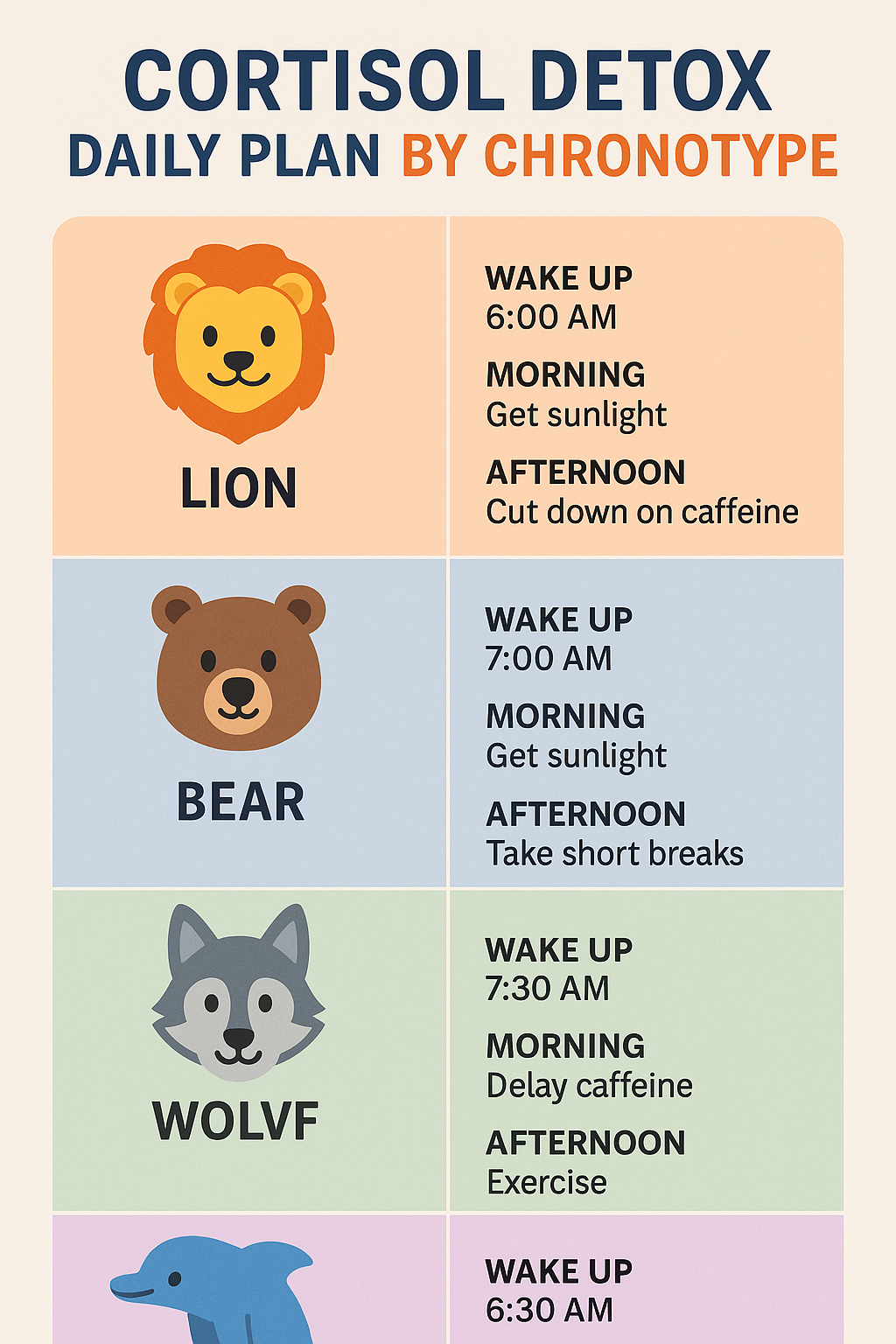
    1. Lion – Early risers, peak productivity in the morning, and fade by evening.
    2. Bear – The most common type, aligned with the sun. Energy peaks mid-morning to early afternoon.
    3. Wolf – Night owls. Struggle in the morning, but energised late afternoon and evening.
    4. Dolphin – Light sleepers with irregular patterns. Often anxious and hyper-aware.

    Understanding your chronotype allows you to time key activities like caffeine intake, exercise, and wind-down rituals to better support healthy cortisol cycles.

    Read Also: How Cutting Out Sugar Speeds Up Weight Loss: The Science, Benefits, and Sustainable Tips for Beginners

    Cortisol Detox Strategies by Chronotype

    🦁 Lions (Early Risers)

    • Cortisol Peak: Early morning
    • Challenge: Energy crashes in the afternoon
    • Detox Tips:
      • Engage in light morning workouts (e.g., walking or yoga)
      • Avoid caffeine after 10 a.m.
      • Power nap or relax during afternoon slumps
      • Use calming evening rituals to aid sleep (e.g., herbal tea, journaling)

    🐻 Bears (Solar Synced)

    • Cortisol Peak: Mid-morning
    • Challenge: Energy wanes if the routine is disrupted
    • Detox Tips:
      • Stick to a consistent wake-sleep cycle
      • Take screen breaks throughout the day to avoid overstimulation
      • Avoid late meals or alcohol before bed
      • Practice mindfulness during lunch or short walks in nature

    🐺 Wolves (Night Owls)

    • Cortisol Peak: Late afternoon or evening
    • Challenge: Groggy mornings, alert late at night
    • Detox Tips:
      • Delay caffeine until at least 10 a.m.
      • Use a sunrise alarm to wake gradually
      • Schedule workouts in the evening
      • Avoid doomscrolling late at night—use blue light blockers

    🐬 Dolphins (Light Sleepers)

    • Cortisol Pattern: Irregular, often triggered by anxiety
    • Challenge: Poor sleep quality, overthinking
    • Detox Tips:
      • Follow strict sleep hygiene (no screens 1 hour before bed)
      • Try meditation or progressive muscle relaxation at night
      • Limit stimulants like sugar and caffeine
      • Use a weighted blanket or calming music to reduce anxiety

    Universal Cortisol Detox Habits (Good for All Chronotypes)

    Regardless of your chronotype, these strategies can support healthy cortisol levels:

    Read Also: Clear Nasal Congestion with Bay Leaves: The Power of Bay Leaves

    • Get early sunlight exposure – Signals your body to regulate cortisol naturally
    • Eat a balanced breakfast – With protein and healthy fats to stabilize blood sugar
    • Limit sugar and processed foods – Reduce cortisol spikes
    • Exercise daily – Choose the right time based on your chronotype
    • Prioritize restorative sleep – Stick to a regular schedule
    • Practice stress-reducing activities – Meditation, deep breathing, or nature walks

    Final Thoughts: Honour Your Rhythm, Heal Your Stress

    You don’t need a one-size-fits-all routine to manage stress. Instead, aligning your daily habits with your chronotype helps you work with your body, not against it. By doing so, your cortisol levels naturally stabilise, leading to better sleep, less anxiety, and a more productive day.

    So, whether you’re a lion rising with the sun or a wolf who thrives under moonlight, your cortisol detox starts with knowing your rhythm.

  • President Mahama Launches ‘MahamaCares’ to Support Ghanaians with Chronic Illnesses

    President Mahama Launches ‘MahamaCares’ to Support Ghanaians with Chronic Illnesses

    President John Dramani Mahama has officially launched the Ghana Medical Trust Fund, popularly known as “MahamaCares,” a groundbreaking initiative aimed at providing financial assistance to individuals living with chronic diseases across the country. The launch event took place on Tuesday, April 29, at the University of Ghana Medical Centre (UGMC) in Accra.

    The fund is designed to cover the cost of care and medication for Non-Communicable Diseases (NCDs) not currently included under the National Health Insurance Scheme (NHIS), thereby complementing it by supporting critical aspects of these conditions. Targeted illnesses include cancer, diabetes, cardiovascular diseases, chronic kidney failure, stroke, and others. The initiative particularly aims to support specialist-level treatment for a wide range of chronic illnesses, including cancers, diabetes, cardiovascular diseases, chronic kidney failure, stroke, and others. 

    Weight Loss Success Stories: What worked and Didn’t

    In his address, President Mahama emphasized the fund’s role in promoting health equity, stating, “This is hope for a future where the quality of life is not determined by one’s ability to pay for essential treatment.”  He also shared personal experiences, noting that he had lost his father, mother, friends, and employees to chronic illnesses, underscoring the need for urgent national support systems. 

    Demonstrating personal commitment, President Mahama pledged to donate six months of his salary to the fund. He appealed to the corporate sector and other stakeholders to contribute to the fund to ensure that individuals battling chronic diseases can access the support they need. 

    Health Minister Kwabena Mintah Akandoh also announced his personal commitment by donating three months of his salary to the fund. He highlighted the inspiring response from the public, including a generous contribution from a pensioner, as evidence of the wide-reaching impact and public goodwill surrounding the initiative. 

    The Ghana Medical Trust Fund represents a significant step towards a more inclusive healthcare system in Ghana, aiming to alleviate the financial burden of chronic diseases and ensure that no Ghanaian is left behind due to financial constraints. 

    Photos from the Event

    H. E. John Dramani Mahama address at the Launch
  • Healthy Ghanaian Breakfasts to Lose Weight: Smart Choices for Sustainable Results

    Healthy Ghanaian Breakfasts to Lose Weight: Smart Choices for Sustainable Results

    Ghanaian Breakfasts to Lose Weight—When it comes to losing weight, it is important to consider the kind of food you put into your system, especially breakfast. In Ghana, most of our staple local foods are full of carbs because they provide a lot of energy, which fits the traditionally active lifestyle of many people—dietary patterns and nutritional status of rural Ghanaian children” (Nutrition Journal, 2013).

    Many nutritionists all over the world would agree that cutting down carbs or, if possible, eliminating them from your diet is the surest and fastest way to lose weight. Unfortunately, the nature of our meals in Ghana makes it difficult, or rather expensive, to achieve your goal of cutting carbs from your diet.

    Read Also: How Cutting Out Sugar Speeds Up Weight Loss: The Science, Benefits, and Sustainable Tips for Beginners

    In this post, we will explore alternatives and also look at ways to incorporate carbs optimally in our diet and possibly look at how we could fit in activities like intermittent fasting to balance the impact of carb-reliant diets.

    Understanding Ghanaian Diets and Weight Loss

    Ghanaian foods are deeply rooted in tradition, culture, and nutrition. Meals like waakye, banku, fufu, kenkey, and yam are rich sources of carbohydrates. While these foods are nourishing, their high carb content can pose a challenge for individuals aiming for weight loss.

    However, you don’t have to abandon your culture to achieve your health goals. It’s about making informed, balanced choices. As a health blogger with a focus on practical, evidence-based advice, I aim to help you find sustainable methods without drastic diet overhauls.

    Healthy Ghanaian Breakfasts to Lose Weight

    Choosing the right breakfast is a crucial first step. Healthy Ghanaian Breakfasts to lose weight are those that are lower in refined carbs, higher in protein, and rich in fibre. Here are some excellent examples:

    1. Hausa Koko With Wheat Bread: Not the usual combination with Puff loaf or Kose because of the extra oil used to fire it, which is bad for your health. Hausa Koko is High in fibre. The Mille, which is the main ingredient in Hausa koko, is a rich source of dietary fibre. Fibre helps you feel full for longer, reducing the urge to snack unnecessarily.

    Additionally, it has a Low Glycemic Index, leading to gradual blood sugar increases rather than sharp spikes, which is essential for managing hunger and energy levels. It also contains magnesium, iron, and antioxidants, which are important for overall metabolic health. Remember to add a little sugar and milk, or avoid it if you can.

    2. Boiled Eggs with Avocado and a Small Portion of Sweet Potato:
    Aside from eggs being the most common source of protein in Ghana, this meal is high in protein and healthy fats, keeping you full longer and stabilising blood sugar levels. I would not recommend eating fried eggs because that extra oil adds to the calories you consume in a day.

    3. Tom Brown without Added Sugar:
    Tom brown (toasted cornmeal porridge) made lightly and without extra sugar can serve as a satisfying, moderate-carb breakfast. Tom brown is rich in fibre and also falls under Complex carbs which are digested more slowly than simple carbs (like sugar), meaning they cause a slower rise in blood sugar levels and keep you feeling full for longer — great for appetite control!

    4. Vegetable Omelette with a Side of Kelewele (small portion):
    A veggie omelette provides protein and fibre, while a small serving of spicy plantain (kelewele) gives a moderate energy boost without overloading on carbs.

    5. Smoothie Bowls:
    Using local fruits like pawpaw (papaya), watermelon, and adding chia seeds or groundnuts can make a nutrient-dense breakfast that’s perfect for weight management.

    6. Greek Yoghurt with Groundnuts and Small Fruit Slices:
    A high-protein option that helps curb cravings throughout the day. Take a walk into any supermarket near you and you will get some at an affordable price. This may not fall under a local dish, however, it is an excellent meal for people trying to lose weight.

    Tips to Optimise Weight Loss on a Ghanaian Diet

    • Practice Intermittent Fasting:
      Limiting your eating window (for example, eating between 12 p.m. and 8 p.m.) can help regulate calorie intake without feeling deprived.
    • Portion Control is Key:
      You don’t have to cut out fufu, kenkey, or yam completely. Reducing the portion size and pairing them with more vegetables and lean protein can make a huge difference.
    • Stay Hydrated:
      Drinking enough water helps regulate appetite and boosts metabolism especially in the morning first thing you need to do when you wake up from bed is to hydrate. As part of a morning wellness drinks to hydrate, some opt for herbal teas or leaf infusions. For instance, soursop leaves are used traditionally, and recent studies suggest they may have health benefits such as reducing inflammation and boosting immunity — see health benefits of soursop leaves.”
    • Prioritise Fibre and Protein:
      Meals rich in beans, lentils, green leafy vegetables, and eggs should be your best friends on this journey.

    As part of a morning wellness drink, some opt for herbal teas or leaf infusions. For instance, soursop leaves are used traditionally and recent studies suggest they may have health benefits such as reducing inflammation and boosting immunity — see Soursop Leaves: The Magical Underrated Benefits.”

    Losing weight while eating Ghanaian foods is not only possible but also sustainable with the right knowledge and practices. By choosing Healthy Ghanaian Breakfasts to lose weight, practising portion control, and staying consistent, you can enjoy your favourite local meals and still achieve your fitness goals.

    Remember, weight loss is a journey, not a race. Making small, smart changes over time leads to long-lasting results. Trust the process — your health is worth the effort!

  • Ministry of Health Launches Enhanced Mobile App for Health Training Admission Forms

    Ministry of Health Launches Enhanced Mobile App for Health Training Admission Forms

    Accra, Ghana – April 24, 2025

    In a bid to streamline the admission process for Health Training Institutions across Ghana, the Ministry of Health has announced the launch of a new and enhanced mobile application for the sale of admission forms.

    Read: The Sunday Reset Routine: 8 Ways to Organize Your Life for the Week Ahead.

    In a press release issued by the Ministry’s Public Relations Unit, the new digital initiative aims to improve accessibility, convenience, and transparency in the admission process. The mobile application is designed to ease the burden on prospective applicants by allowing them to purchase and apply for admission forms from the comfort of their homes, thereby eliminating the need to travel long distances.

    As part of the rollout of this new system, the Ministry has rescheduled the start date for the sale of admission forms. Originally set for April 22, 2025, the sale will now commence on May 5, 2025, and end on June 5, 2025.

    The Ministry highlighted that this innovation forms part of ongoing efforts to digitize public services and reduce the financial and logistical challenges associated with traditional methods of purchasing admission forms.

    Read Also : Ministry of Health Announces Reduction in the cost of Application Forms for admission into Health Training Institutions

    “We appreciate the cooperation of all as we work towards a more efficient and user-friendly admissions process,” the Ministry said in the release.

    Prospective applicants are encouraged to take advantage of this improved system as the Ministry continues to prioritize technology-driven solutions for public service delivery.

    Issued by:

    Public Relations Unit

    Ministry of Health

    Republic of Ghana

    Ministry of Health Launches Enhanced Mobile App
    Ministry of Health Launches Enhanced Mobile App
  • Ministry of Health Announces Reduction in the cost of Application Forms for admission into Health Training Institutions

    Ministry of Health Announces Reduction in the cost of Application Forms for admission into Health Training Institutions

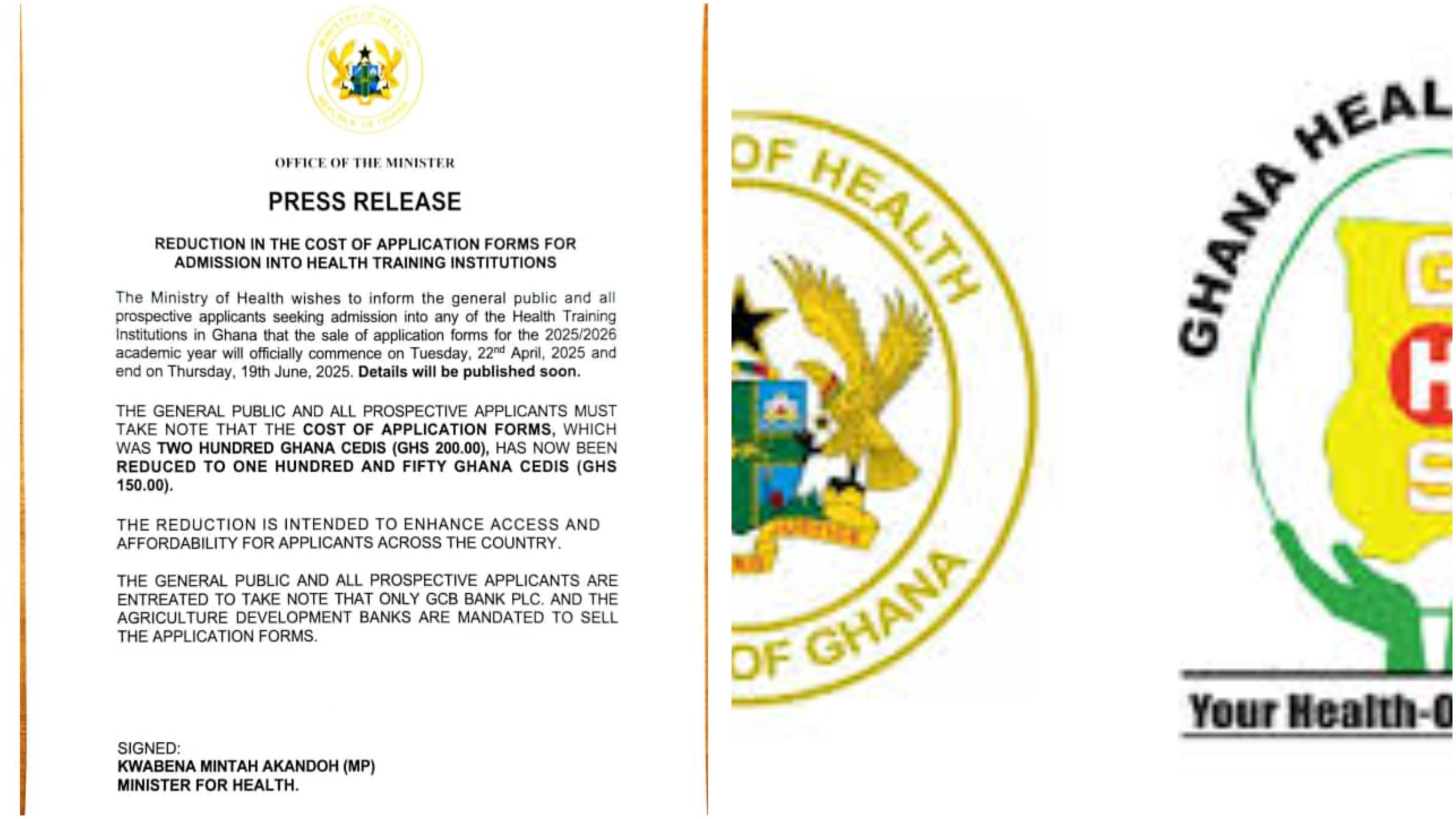
    Ministry of Health Announces Reduction in the cost of Application Forms– The Ministry of Health (MOH) through a written communique that was shared via their social media page has announced a reduction in the cost of application fees to its health training institutions effective 22nd April 2025.

    Read Also: Plastic in Your Blood? Scientists Just Found It in Humans!

    According to MOH, “THE REDUCTION IS INTENDED TO ENHANCE ACCESS AND AFFORDABILITY FOR APPLICANTS ACROSS THE COUNTRY.”

    The applicant fees which was previously GHC 200 has now been reduced to GHC 150.

    By the Press release issued, the general public are also informed that the sale of application forms for the 2025/2026 academic year will officially commence on Tuesday, 22nd April, 2025 and end on Thursday, 19th June, 2025.

    The Ministry added in their letter that only two banks namely GCB PLC and Agricultural Development Bank are mandated to sell their application forms.

    You may find the letter below

    Ministry of Health Announces Reduction in the cost of Application Forms
    Ministry of Health Announces Reduction in the cost of Application Forms

    Follow My Facebook Page Here

  • Gari vs Rice: Which is the better alternative when trying lose weight.

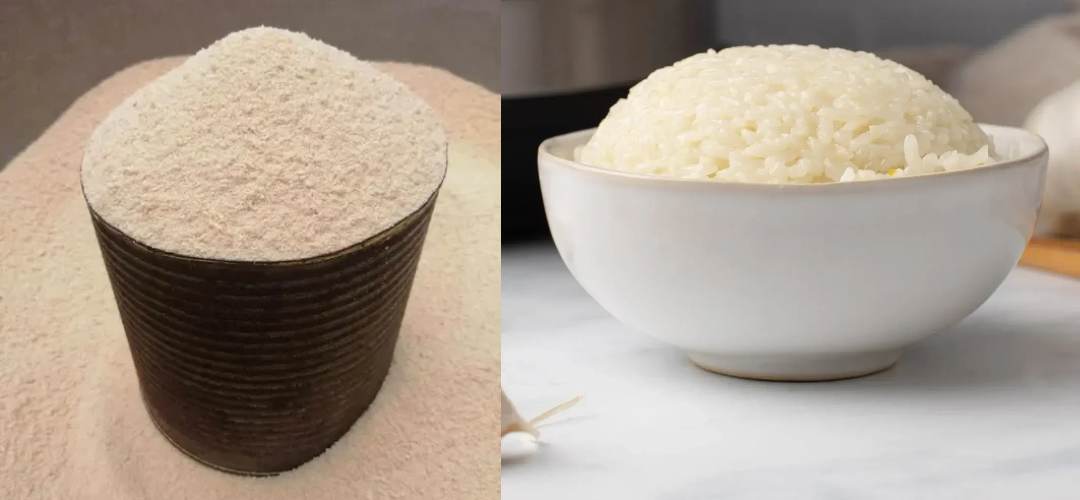
    Gari vs Rice: Which is the better alternative when trying lose weight.

    Gari vs Rice – Many health and nutrition experts all over the world recommend cutting carbs to lose weight. This is because excess carbs in your body are broken down into sugars. Excess sugar in your bloodstream causes a spike in Insulin, the hormone responsible for regulating blood sugar.

    Once your insulin level is high or you become Insulin Resistant, then your body cannot burn fat effectively for energy. To fully understand the effects of Gari and Rice, both of which are registered on the glycemic index, we will first have to understand what the glycemic index is, the effect such foods have on your body and weigh between the two dietary choices.

    Please spare a few minutes to follow any of my social media pages

    Read Also: Quick fat-blasting weight loss plan to lose weight by end of 2024.

    What is the Glycemic Index?

    Gari vs Rice: Which is the better alternative when trying lose weight.

    The Glycemic Index (GI) is a scale from 0 to 100 that ranks carbohydrates based on how quickly they raise blood sugar levels after eating. Foods with a high GI (70 and above) cause a rapid spike in blood sugar, while those with a low GI (55 or less) are digested more slowly, resulting in a gradual rise in blood sugar. This is important because frequent blood sugar spikes can lead to insulin resistance and eventually type 2 diabetes or obesity.

    Gari on the Glycemic Index

    Gari, made from fermented and roasted cassava, is a common staple in many West African countries. While it’s affordable and energy-dense, it is also high in carbohydrates and has a moderately high GI, typically ranging between 65 to 75, depending on how it’s processed and prepared.

    Moreover, Gari lacks significant amounts of protein or fiber, which are essential for slowing digestion and controlling blood sugar. Eating it with protein-rich accompaniments or fiber (like vegetables or legumes) may reduce its glycemic impact, but by itself, it still ranks relatively high in terms of how it affects blood sugar levels.

    Rice on the Glycemic Index

    Rice, particularly white rice, also has a high GI, typically ranging from 70 to 89 depending on the variety and how it is cooked. Brown rice, on the other hand, has a slightly lower GI, around 50 to 55, because it retains the bran and germ, which add fiber and slow down sugar absorption.

    However, in many diets, especially in Ghana and other parts of West Africa, white rice is more commonly consumed, and that version can significantly elevate blood sugar levels after eating—similar to or even worse than Gari in some cases.

    Read Also: How Cutting Out Sugar Speeds Up Weight Loss: The Science, Benefits, and Sustainable Tips for Beginners

    Gari Vs Rice: Which is Better?

    Gari vs Rice: Which is the better alternative when trying lose weight.

    When it comes to Gari Vs Rice, both are high-carb foods and not ideal choices if you’re on a low-carb or ketogenic diet. That said, if you must choose one based on glycemic impact and nutritional content, brown rice may be a better option than gari or white rice due to its lower GI and higher fiber content.

    However, if brown rice is unavailable and the choice is between Gari and white rice, it comes down to portion control and what it’s eaten with. Gari, when consumed in moderation and paired with protein and fiber-rich foods, may cause slightly less of a blood sugar spike than white rice, depending on preparation.

    Final Thoughts on Gari Vs Rice

    Both Gari and Rice are staples in many diets, but from a blood sugar and weight management perspective, neither is particularly favorable for low-carb eaters. Yet, if you must choose one, your decision should be guided by how each affects your body based on their glycemic index and what you pair them with.

    So in the Gari Vs Rice debate, there is no absolute winner, but with the right portions and dietary context, one may suit your nutritional goals better than the other.

  • The Sunday Reset Routine: 8 Ways to Organize Your Life for the Week Ahead.

    The Sunday Reset Routine: 8 Ways to Organize Your Life for the Week Ahead.

    My Sundays are truly dedicated for resting—unless I’m unable to complete tasks I assigned myself the previous day. I’d rather use the whole of my Sunday for resting and taking good care of myself because how satisfied I feel by the end of the week often depends on how well I planned it. And all of this planning happens on Sunday.

    Today I want to share with you tips for creating a meaningful routine that will not only make your Sunday relaxing but also guarantee you an organized and fulfilling week.

    This is what I call the Sunday Reset Routine—a structured but flexible approach to wrapping up the week, resetting your space, resetting your mind, and stepping into Monday with clarity and calm.

    Let’s break it down.

    1. Start with the Non-Negotiable: Rest

    The Sunday Reset Routine: 8 Ways to Organize Your Life for the Week Ahead.

    First things first—Sunday should not feel like a second Saturday filled with errands and unfinished tasks. You can’t reset properly if you’re running on fumes. Even if you have things to get done, carve out time for real rest. This could be:

    • Sleeping in a little longer
    • Reading for pleasure
    • Going on a slow walk
    • Taking a long bath
    • Watching something light with zero guilt

    The key is intentional rest—not the kind where you scroll your phone and feel drained after. This sets the tone for the rest of your Sunday Reset Routine.

    Read Also: How Stress is Making You Grow and Look Older Than Your Age

    2. Reflect Before You Plan

    Before jumping into your to-do list for the next week, take a few minutes to reflect on the past one. Ask yourself:

    • What worked well last week?
    • What drained my energy?
    • What am I proud of?
    • What do I want to do differently?

    You can write this in a journal, type it out in your Notes app, or just think it through with your morning coffee. This short reflection gives you a sense of closure and helps you build your plan with intention instead of just copying last week’s template.

    3. Declutter Your Space (and Your Brain)

    The Sunday Reset Routine: 8 Ways to Organize Your Life for the Week Ahead.

    It’s hard to feel mentally clear when your space is a mess. A quick home reset goes a long way. You don’t need to deep clean—just enough to feel like you’re starting fresh:

    • Make your bed
    • Tidy your desk or workspace
    • Empty your trash
    • Clear out your bag or purse
    • Do a load of laundry if needed

    At the same time, clear your mental clutter too. Brain-dump everything floating in your mind—ideas, errands, worries, reminders—onto paper or a digital note. Once it’s out of your head, you can sort through it and decide what actually matters this week.

    4. Review Your Calendar and To-Do List

    This is the “get your life together” moment. Look at your upcoming week:

    • Any meetings or deadlines?
    • Appointments or events?
    • Personal goals you want to make time for?

    Lay it all out. This is where planners, digital calendars, or apps like Notion or Google Calendar can help. Block time for your key priorities, but don’t overstuff your schedule. Leave space for flexibility, rest, and the unexpected.

    If you often feel like your weeks run you instead of the other way around, this step is a game changer. You’re choosing how to spend your time—proactively, not reactively.

    5. Set 1-3 Main Intentions for the Week

    Instead of creating a massive to-do list, pick a few core intentions or priorities for the week. These might be:

    • Finish a specific work project
    • Cook at home three nights
    • Exercise four times
    • Reach out to a friend you’ve been meaning to call

    These give your week a clear focus. Even if other things get chaotic, if you hit your core intentions, you’ll feel grounded and accomplished.

    6. Do Light Prep (But Keep It Simple)

    Prepping for the week doesn’t mean a full-on productivity sprint. A few small things can save you stress later:

    • Plan your meals or at least jot down a few dinner ideas
    • Prep one or two easy meals/snacks
    • Lay out outfits for Monday (or for the week, if that helps)
    • Refill your water bottle or coffee supplies
    • Charge your devices

    Think of this as setting yourself up for Future You. Just like you’d clean up after cooking so tomorrow’s kitchen feels fresh—this is the life version of that.

    7. Do Something That Fills You Up

    when to restart or push the reset button in your life comes as a feeling

    A Sunday Reset Routine isn’t just about cleaning and planning. It’s about getting centered and intentional. So, include one thing that fills you back up emotionally or spiritually. That might be:

    • Journaling
    • A nature walk
    • Meditation or breathwork
    • Listening to music or a podcast you love
    • Doing a creative hobby like drawing or baking

    This is what makes Sunday feel restorative instead of like homework. It puts gas back in your tank so you’re not starting the week already drained.

    8. Pick a Wind-Down Ritual

    As Sunday evening rolls in, the Sunday Scaries might try to creep up. A solid wind-down ritual keeps that anxiety in check. Here are a few ideas:

    • Turn off email and social media notifications
    • Light a candle and make a cup of tea
    • Read a few pages of a book
    • Do a quick stretch or yoga flow
    • Write out your top three tasks for Monday
    • Go to bed on time (or even early)

    The goal is to transition out of weekend mode gently so that when Monday hits, you’re not shocked out of a fog.

    Read Also: According to Health Experts, Here Are a Number of Ways to Manage Stress

    Why the Sunday Reset Routine Works

    This routine works because it respects the balance between rest and responsibility. It gives you permission to slow down and get ahead. It helps you be intentional instead of reactive. And when you start your week with clarity instead of chaos, everything feels more manageable.

    You don’t need to do everything on this list. The point isn’t perfection—it’s rhythm. The Sunday Reset Routine is about tuning in, taking care of yourself, and preparing your life for the week ahead, your way.

    So next Sunday, don’t just let the day slip by. Use it to reset. You’ll be surprised how much lighter and more focused you feel when Monday rolls around.

    What’s Your Sunday Reset Look Like?

    Your reset routine doesn’t have to match anyone else’s. Maybe you add something spiritual. Maybe you do a full skincare and journal session. Maybe you keep it super low-key. What matters is that it helps you feel organized, calm, and clear-headed.

    Try a few of these tips next Sunday. See what sticks. And remember: rest is productive. Planning is powerful. And the Sunday Reset Routine is where they meet.

    Want a printable checklist or template for your Sunday Reset Routine? Drop a comment or message—I’ll send it your way.

  • Benefits of dipping face in cold ice water first thing in the morning

    Benefits of dipping face in cold ice water first thing in the morning

    Ashton Hall is famed for his popular morning routine of dipping his face in ice-cold, expensive water followed by an intense workout. Many have called him out for this “unrealistic” routine. This has sparked a trend on social media, leading many to engage in dipping their face in ice-cold water.

    The rising popularity of this trend begs the question, “Is there any benefit to dipping your face in ice water first thing in the morning?”

    This simple ritual offers a multitude of benefits for both your skin and overall well-being. Let’s explore the advantages of incorporating this refreshing technique into your morning routine.

    1. Enhances Skin Radiance

    Immersing your face in ice-cold water stimulates blood circulation. The sudden exposure to cold causes blood vessels to constrict and then dilate, promoting increased blood flow to the skin. This process delivers essential oxygen and nutrients, resulting in a healthy, radiant complexion. Regular practice can lead to a natural glow, making your skin appear more vibrant and youthful. 

    Read Also: 6 Healthy Snacks to Eat While on Your Weight Loss Journey

    2. Reduces Puffiness and Inflammation

    Cold water immersion is highly effective in minimizing facial puffiness, especially around the eyes. The cold temperature causes blood vessels to constrict, which helps reduce swelling and inflammation. This can be particularly beneficial after a night of inadequate sleep or excessive salt intake, both of which can lead to fluid retention and puffiness. By incorporating this practice into your morning routine, you can achieve a more refreshed and alert appearance. 

    3. Tightens Pores and Improves Skin Texture

    Dipping your face in cold ice water can lead to the tightening of skin pores. The cold temperature causes the skin to contract, reducing the appearance of enlarged pores and resulting in a smoother complexion. This effect not only enhances the skin’s appearance but also helps in reducing the accumulation of dirt and oil, which can lead to acne and blemishes. 

    4. Alleviates Acne and Prevents Breakouts

    The anti-inflammatory properties of cold water can be beneficial for individuals dealing with acne. By reducing redness and swelling, cold water immersion can soothe inflamed skin and decrease the size of acne lesions. Additionally, the constriction of blood vessels helps in reducing the production of excess sebum, a key contributor to acne formation. 

    5. Provides a Natural Energy Boost

    The shock of cold water on your face can serve as a natural stimulant, increasing alertness and energy levels. This invigorating effect is due to the release of adrenaline triggered by the sudden cold exposure, helping you feel more awake and prepared to tackle the day ahead. 

    6. Enhances Product Absorption

    Incorporating cold water immersion into your skincare routine can improve the absorption of topical products. After the cold exposure, as the skin warms up, blood vessels dilate, facilitating better penetration of serums and moisturizers. This can enhance the efficacy of your skincare regimen, allowing active ingredients to work more effectively. 

    7. Soothes Skin Irritations

    dipping face in cold ice water first thing in the morning

    Cold water immersion can provide relief from various skin irritations, including sunburns and allergic reactions. The cooling effect helps to calm the skin, reduce redness, and alleviate discomfort associated with these conditions. It’s a simple and natural method to soothe irritated skin without the need for additional products. 

    How to Perform the Cold Ice Water Face Dip

    dipping face in cold ice water first thing in the morning

    To incorporate this practice into your morning routine:

    1. Prepare the Ice Water: Fill a bowl with cold water and add a generous amount of ice cubes to achieve a chilly temperature.

    2. Cleanse Your Face: Begin with a clean face by using a gentle cleanser to remove any impurities.

    3. Immerse Your Face: Submerge your face into the ice water for intervals of 10 to 30 seconds. Repeat this process a few times, depending on your comfort level.

    4. Pat Dry: Gently pat your face dry with a soft towel. Avoid rubbing, as the skin may be sensitive after the cold exposure.

    5. Moisturize: Apply a hydrating moisturizer to lock in moisture and protect the skin barrier.

    Read Also: Plastic in Your Blood? Scientists Just Found It in Humans!

    Precautions to Consider

    While dipping your face in cold ice water offers numerous benefits, it’s important to exercise caution:

    • Limit Exposure: Avoid prolonged exposure to prevent skin irritation or frostbite. Short intervals are sufficient to reap the benefits.

    • Monitor Skin Response: If you experience excessive redness, discomfort, or adverse reactions, discontinue the practice and consult a dermatologist.

    • Individual Sensitivities: Individuals with certain skin conditions, such as rosacea or hypersensitivity, should consult with a healthcare professional before incorporating this practice.

    Incorporating the practice of dipping your face in cold ice water into your morning routine can serve as a revitalizing ritual, offering a range of benefits from enhanced skin appearance to increased alertness. As with any skincare practice, it’s essential to listen to your body and adjust accordingly to ensure a safe and enjoyable experience.

  • Plastic in Your Blood? Scientists Just Found It in Humans!

    Plastic in Your Blood? Scientists Just Found It in Humans!

    The presence of microplastics in our environment has long been a concern, but new research has revealed something even more alarming—plastic is now circulating in our bloodstream. A groundbreaking study has provided the first direct evidence of microplastics in human blood, raising urgent questions about potential health risks and long-term consequences.

    What Are Microplastics and How Do They Enter the Bloodstream?

    Microplastics are tiny plastic particles, often less than five millimeters in size, that result from the breakdown of larger plastic waste or are intentionally manufactured for use in cosmetics, clothing, and packaging. These particles are now widespread in our food, water, and even the air we breathe.

    A 2022 study conducted by Dutch researchers at Vrije Universiteit Amsterdam found microplastics in nearly 80% of blood samples tested. The study, published in Environment International, detected polyethylene terephthalate (PET), polystyrene, and polyethylene—the same plastics used in water bottles, food packaging, and shopping bags (Leslie et al., 2022).

    How Do Microplastics Enter the Blood?

    • Consumption: Bottled water, seafood, and processed foods often contain microplastics.
    • Inhalation: Airborne microplastics from synthetic textiles and industrial pollution can be inhaled and absorbed into the bloodstream.
    • Skin Absorption: Though less common, certain personal care products contain microplastics that can penetrate the skin.

    Read Also: Link between Pork and Cancer: Can pork meat cause cancer

    Potential Health Risks of Plastic in the Blood

    While research is ongoing, scientists have raised serious concerns about the impact of microplastics on human health. Some of the key risks include:

    1. Inflammation and Cellular Damage

    Microplastics can trigger immune system responses, leading to chronic inflammation. A study in Frontiers in Endocrinology suggests that when immune cells attempt to break down plastic particles, they release harmful oxidative stress molecules, which can contribute to tissue damage and diseases like cancer.

    2. Hormonal Disruption

    Many plastics contain endocrine-disrupting chemicals (EDCs) such as bisphenol A (BPA) and phthalates, which interfere with hormone function. According to research in The Journal of Clinical Endocrinology & Metabolism, EDC exposure is linked to reproductive issues, obesity, and metabolic disorders (Gore et al., 2015).

    3. Cardiovascular and Neurological Effects

    Particles small enough to enter the bloodstream may travel to organs such as the heart and brain. A 2023 review in Environmental Science & Technology indicates that microplastics may contribute to heart disease, neurodegenerative disorders, and even cognitive decline (Yong et al., 2023).

    4. Potential Cancer Risks

    Although no direct link between microplastics and cancer in humans has been established, animal studies suggest that prolonged exposure to certain plastics may promote tumor growth. Researchers from Duke University found that nanoplastics can alter cell DNA, a hallmark of cancer development (Vethaak & Legler, 2021).

    Read Also: The Science Behind Déjà Vu: Unlocking the Mystery of the Mind

    How Can We Reduce Exposure to Microplastics?

    Plastic in Your Blood

    While microplastics are nearly impossible to avoid entirely, there are steps individuals can take to minimize exposure:

    • Drink Filtered Water: Studies show that bottled water contains twice as many microplastics as tap water (Mason et al., 2018). Use a high-quality filter to remove contaminants.
    • Limit Plastic Use: Reduce reliance on single-use plastics, especially food containers and utensils.
    • Choose Natural Fibers: Synthetic clothing sheds microplastics into the air and water. Opt for organic cotton, wool, or bamboo.
    • Ventilate Indoor Spaces: Airborne microplastics accumulate indoors. Regularly clean surfaces and improve ventilation.
    • Support Regulations: Advocate for stricter policies on plastic production and waste management to curb environmental pollution.

    The discovery of plastic in human blood is a wake-up call about the pervasiveness of microplastic pollution. While the full health implications are still being studied, early evidence suggests that prolonged exposure could have serious consequences. By staying informed, making conscious choices, and pushing for systemic change, we can reduce our risk and limit further damage to our health and environment.

  • Link between Pork and Cancer: Can pork meat cause cancer

    Link between Pork and Cancer: Can pork meat cause cancer

    Key Takeaways

    1. Pork is widely consumed but linked to cancer concerns in studies.
    2. WHO classifies processed pork as a carcinogen, increasing colorectal cancer risk.
    3. Processed pork contains nitrates that form carcinogenic nitrosamines in the body.
    4. Red meat, including pork, is a probable cancer cause, especially colorectal cancer.
    5. High-heat cooking of pork creates cancer-causing compounds like HCAs and PAHs.
    6. Excess heme iron in pork can trigger oxidative stress, promoting cancer growth.
    7. Studies show processed pork increases colorectal cancer risk by 18%.
    8. Unprocessed pork also raises risks, particularly for colorectal and pancreatic cancer.
    9. Grilling, smoking, and frying pork increase carcinogenic compound formation.
    10. Boiling or steaming pork reduces harmful compound production.
    11. Limiting processed pork and choosing lean cuts can lower cancer risks.

    The Link Between Pork and Cancer: What Science Says

    Link between Pork and Cancer

    Pork is one of the most widely consumed meats in the world. From bacon and ham to sausages and pork chops, this red meat is a staple in many diets. However, concerns about its health effects, particularly regarding cancer risk, have been growing. Several studies have examined the potential dangers of pork consumption, particularly processed pork, in relation to cancer. In this article, we will explore the scientific evidence behind the claim that pork may increase cancer risk, the mechanisms involved, and how to make healthier dietary choices.

    Understanding the Cancer Risk from Pork Consumption

    The World Health Organization (WHO) and the International Agency for Research on Cancer (IARC) have classified processed meats, including pork products like bacon and sausages, as Group 1 carcinogens. This means there is sufficient evidence that they cause cancer, particularly colorectal cancer. Additionally, red meat, which includes pork, is classified as a Group 2A carcinogen, indicating that it is a probable cause of cancer (IARC, 2015).

    Read Also: This Common Household Item is Linked to Cancer – And You Use It Daily

    Processed Pork and Cancer: A Major Concern

    One of the primary reasons pork has been linked to cancer in studies is its processing and preparation methods. Processed pork refers to meats that have been preserved by smoking, curing, salting, or adding chemical preservatives. Examples include:

    • Bacon
    • Sausages
    • Ham
    • Salami
    • Hot dogs

    These processed meats contain nitrates and nitrites, which are used as preservatives. In the body, they can form nitrosamines, which are known carcinogens. Research has shown that frequent consumption of processed pork significantly increases the risk of colorectal, pancreatic, and stomach cancer.

    A meta-analysis published in BMC Medicine found that individuals who consumed 50 grams of processed meat per day had an 18% higher risk of colorectal cancer compared to those who ate little to no processed meat (Zeraatkar et al., 2019). These findings strongly support the claim that pork linked to cancer in studies is not an exaggeration but a serious public health concern.

    Red Meat, Including Pork, and Cancer Risk

    While processed pork poses a clear risk, even unprocessed pork is classified as red meat, which has been associated with cancer risk. Studies suggest that excessive consumption of red meat, including fresh pork, may increase the likelihood of developing cancers such as:

    • Colorectal cancer
    • Pancreatic cancer
    • Prostate cancer

    The mechanism behind this risk involves the presence of heme iron, which is abundant in red meat. Heme iron can lead to oxidative stress in the body, promoting cell damage and increasing the likelihood of cancer development. Additionally, cooking pork at high temperatures, such as grilling or frying, can create harmful compounds known as heterocyclic amines (HCAs) and polycyclic aromatic hydrocarbons (PAHs). These compounds have been shown to cause DNA mutations, which can trigger cancerous growths (Cross et al., 2010).

    A study published in the Journal of the American Medical Association (JAMA) found that individuals who consumed large amounts of red meat had a 20-30% higher risk of colorectal cancer (Chan et al., 2011). This further strengthens the argument that pork linked to cancer in studies should not be ignored.

    How Cooking Methods Impact Cancer Risk

    The way pork is cooked plays a crucial role in determining its health effects. Studies show that high-temperature cooking methods can produce cancer-causing chemicals, increasing the risk of disease. These methods include:

    • Grilling
    • Barbecuing
    • Pan-frying
    • Smoking

    When meat is exposed to extreme heat, chemical reactions occur, leading to the formation of HCAs and PAHs. These compounds have been classified as potential carcinogens by health organizations. Boiling, steaming, or slow-cooking pork at lower temperatures can help reduce the production of these harmful substances (Sugimura, 2000).

    Read Also: 10 Lifestyle Choices That Could Lead to Stroke

    Is There a Safe Level of Pork Consumption?

    Many experts agree that moderation is key when it comes to pork consumption. Completely avoiding processed pork is highly recommended, but occasional consumption of unprocessed pork in moderate amounts may not pose significant risks if combined with a healthy lifestyle.

    Ways to Reduce Cancer Risk While Consuming Pork

    If you still want to include pork in your diet, consider the following tips to minimize risk:

    1. Limit Processed Pork – Reduce or eliminate bacon, sausages, and deli meats from your diet.
    2. Choose Lean Cuts – Opt for leaner parts of pork like tenderloin or loin chops.
    3. Use Healthier Cooking Methods – Bake, steam, or slow-cook pork instead of frying or grilling.
    4. Increase Fiber Intake – Eating fiber-rich foods like vegetables, whole grains, and legumes can help counteract harmful effects.
    5. Balance Your Diet – Incorporate plenty of plant-based proteins like beans, lentils, nuts, and seeds.
    6. Stay Active – Regular physical activity can help reduce cancer risk and maintain overall health.

    Alternative Protein Sources to Consider

    Functional Foods
    Link between Pork and Cancer

    If you’re looking for safer alternatives to pork, consider the following protein-rich foods:

    • Fish: Salmon, mackerel, and sardines provide healthy omega-3 fats and lower cancer risk.
    • Poultry: Chicken and turkey are leaner options with lower carcinogenic risks.
    • Legumes: Beans, lentils, and chickpeas are excellent sources of plant-based protein.
    • Nuts and Seeds: Almonds, walnuts, and chia seeds provide protein and beneficial fats.
    • Tofu and Tempeh: Great plant-based alternatives rich in protein and nutrients.

    Read Also: Retinol and Tretoin Use – Your excessive skincare routine jeopardize your Pregnancy

    Final Thoughts

    Scientific evidence strongly suggests that processed pork is carcinogenic, while excessive consumption of red meat, including pork, is a probable cause of cancer. The mechanisms behind this risk include nitrosamines, heme iron, and high-temperature cooking byproducts.

    However, adopting healthier dietary habits, moderating pork intake, and choosing better cooking methods can significantly reduce potential risks. Individuals concerned about cancer should prioritize a balanced diet rich in plant-based foods and lean proteins while limiting their intake of processed and red meats.

    As more studies emerge, it is crucial to stay informed and make dietary choices that promote long-term health. Pork linked to cancer in studies is a growing concern, and taking preventive steps today can lead to better health outcomes in the future.