


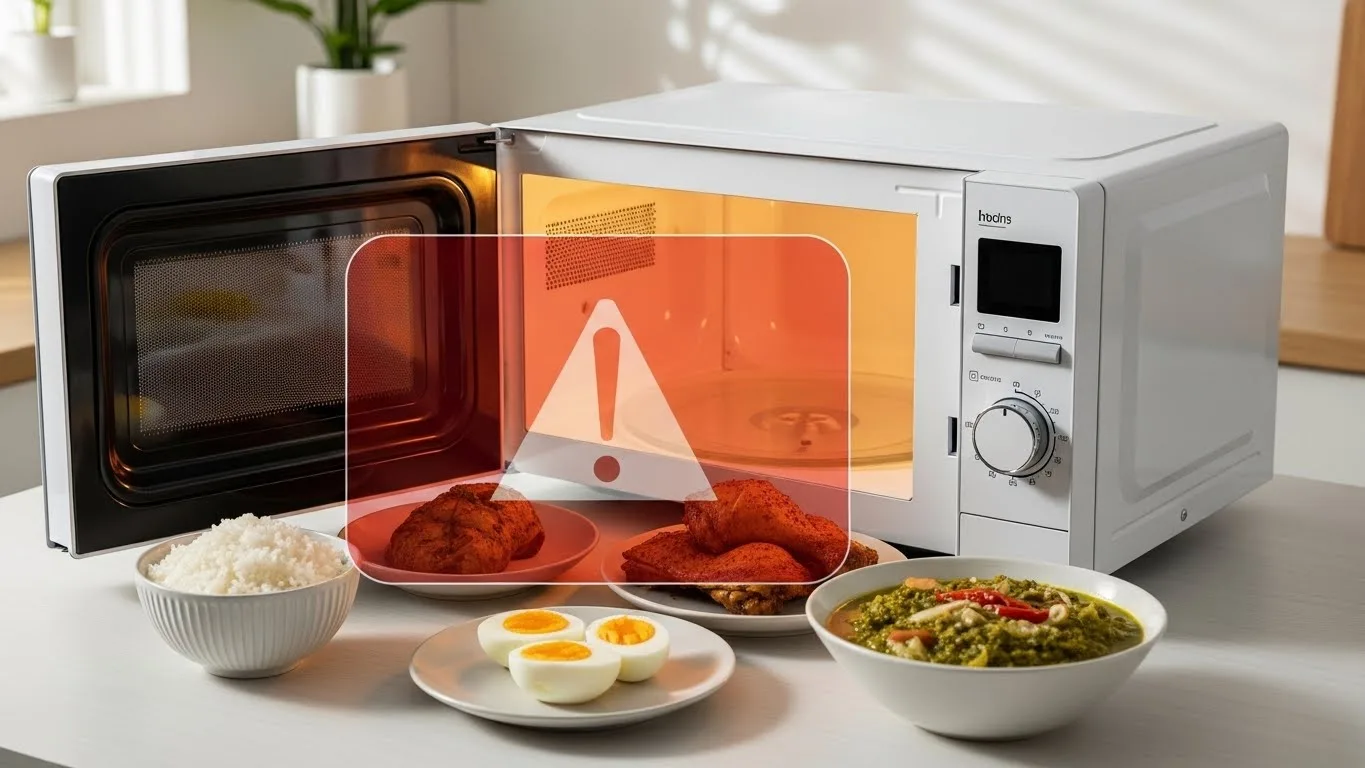
When it comes to what you put in your mouth as food, it is essential to ensure that it is wholesome because there is a thin line between poison and food. Reheating food might look like something normal. In fact, it is. However, there are certain foods that you should avoid reheating.
Our world is fast-paced, and there is little time to do the very things that are of the utmost importance to us. It makes sense to reheat certain foods as a matter of convenience. Because we won’t always get time to prepare a fresh meal whenever we want to eat. Personally, I like to prepare my stews and soups over the weekend to serve me throughout the week. I do this because it is easy and fits well into my schedule.
For many of us, this is our routine, and it isn’t bad at all. However, there are some factors we need to consider and precautionary measures necessary to be taken. On that note, let us delve into

Foods You Should Avoid Reheating
1. Rice
I know you didn’t expect this, but heating rice improperly, especially when it retains too much moisture, can cause Bacillus cereus, a bacterium that survives cooking and grows when rice sits out too long.
Maybe you cooked more than you could eat and thought it best to heat it and leave it on the kitchen counter, and continue tomorrow. This is a bad idea because Bacillus cereus thrives best in temperatures ranging from 20–40 °C (room temperature to warm conditions).
Read Also: The Anti-Inflammatory Food Guide: What to Eat, What to Avoid, and How to Flush Inflammation Fast
These bacterial pores multiply so fast that leaving the rice to cool just for a few hours poses such risks, even if you freeze it after. You might think refrigeration might be the solution; unfortunately, it only slows growth, but inadequate cooling or reheating can still pose risks. You know your rice is contaminated when you experience Severe vomiting, Diarrhoea, and “Fried Rice Syndrome”
The best thing you can do is to eat what you cook hot. This is how Bacillus cereus looks under a microscope.

2. Chicken

Chicken is one of those foods that tastes even better the next day, but reheating it carelessly can turn it into a digestive nightmare. This isn’t to scare you — it’s simply the reality of how chicken behaves when it cools and gets reheated over and over again.
Chicken contains dense proteins that change structure when exposed to fluctuating temperatures. When you heat it, cool it, and heat it again, these proteins harden in a way that makes the chicken difficult to digest. This explains why sometimes after eating leftover chicken, you feel bloated, uncomfortable, or strangely full even when you didn’t eat much.
The more concerning issue, however, is bacteria growth. Maybe you cooked chicken in the evening, ate some, and left the rest on the table because you were tired. By the time you wake up, bacteria such as Salmonella or Campylobacter may have already multiplied. And no — reheating to “very hot” doesn’t always fix the problem. Some toxins remain active even after heating.
Read Also: 21 Brain-Boosting Foods That Sharpen Focus, Memory & Mental Clarity
If you experience stomach cramps, diarrhoea, or nausea after eating reheated chicken, your body is simply reacting to the changes the chicken has undergone or the bacteria it picked up while cooling.
The safest approach? Eat your chicken fresh or refrigerate it immediately after cooling. And if you must reheat it, do it only once and make sure it’s steaming hot all the way through.
3. Eggs

This one surprises a lot of people because eggs are widely considered safe, simple, and harmless. But reheating eggs , especially boiled or fried eggs can introduce more problems than you might imagine.
Eggs are rich in delicate proteins that react quickly to heat. When eggs are reheated, these proteins can break down into compounds that are harder for the stomach to handle. This is why leftover egg stew or that boiled egg you try to warm up in the microwave can sometimes result in bloating or a strange discomfort in your stomach.
The bigger issue is bacteria growth. Once eggs are cooked and left out, their moisture content and nutrient richness make them a perfect environment for bacteria to multiply. By the time you reheat it, the damage might already be done — and no amount of extra microwaving will reverse bacterial toxins.
If you’ve ever had reheated eggs and ended up with a sour stomach or loose stool shortly after, now you know why. The safest option is to eat eggs fresh and avoid reheating them entirely.
4. Kontomire (Spinach)

If you are Ghanaian, kontomire is a household favourite. Whether it’s stew, yams and kontomire, or abom, it’s part of our culture. But reheating kontomire repeatedly is something you should avoid, and here’s why.
Read Also: 10 Foods Your Doctor Will Tell You to Avoid If You Have High Blood Pressure and Why
Leafy greens such as spinach and kontomire contain naturally occurring compounds called nitrates. These compounds are harmless in their fresh state, but when exposed to heat multiple times, they convert into nitrites, and then into nitrosamine substances linked to harmful health effects over long-term exposure.
To put it simply, that kontomire stew you keep warming every day may not be as harmless as you think.
A second issue is oxidation. Kontomire is often cooked with palm oil, tomatoes, and spices. Reheating these oils repeatedly causes them to break down into free radicals, which stress your body at the cellular level.
You might not notice anything immediately, but over time, this can contribute to inflammation and digestive discomfort.
If you want to enjoy kontomire safely, cook what you can finish, or store it properly and warm it only once. Also, you can portion the stew into smaller sizes and keep it in the freezer such that you only heat the small quantity you need and finish it.
5. Potatoes
Potatoes may seem harmless. After all, they’re just carbs, right? But they behave differently from other foods when they cool down and are reheated.
Cooked potatoes left at room temperature for too long can develop Clostridium botulinum, the same bacteria responsible for botulism. Even though rare, it’s something worth paying attention to because the effects are severe.
This usually happens when you cook potatoes, leave them to cool on the stove, forget about them, and then warm them the next day. Even if you don’t get sick immediately, some people experience nausea, vomiting, or dizziness after reheating poorly stored potatoes.
Potatoes also lose their texture and nutritional quality when reheated, becoming mushy, heavy, or oddly sweet.
To be safe, refrigerate potatoes shortly after cooking and avoid reheating them multiple times.
6. Oily Stews (Palm Oil Stew, Shito, and Groundnut Soup)

Now, this one hits home because most Ghanaian households love their stews. But reheating oily stews over and over again is something we rarely think twice about — even though it comes with hidden risks.
When oils such as palm oil, vegetable oil, or groundnut paste are reheated repeatedly, they oxidise and form harmful compounds known as free radicals. These compounds place unnecessary stress on your organs and can affect your digestive system.
Read Also: 10 Best Foods to Boost Nitric Oxide Naturally for Better Circulation & Heart Health
If you’ve ever noticed that reheated stew tastes slightly more acidic or gives you mild heartburn, it is often because the oil has changed composition after multiple heat cycles.
This doesn’t mean you shouldn’t enjoy your stews; it simply means you should warm only what you need and avoid heating the entire pot every time.
7. Fish (Especially Oily Fish Like Mackerel, Tuna, or Salmon)

Fish is a fantastic source of healthy fats and proteins, but reheating oily fish too many times destroys its quality and introduces problems most people never think about.
Oily fish contain omega-3 fatty acids — healthy when fresh, but when reheated repeatedly, these fats break down into oxidised compounds that may trigger inflammation.
If you’ve ever eaten reheated fish and felt a headache, bloating, or slight nausea afterwards, it’s not in your head. It’s your body responding to the altered fats.
Fish is also extremely sensitive to bacteria, especially when left out after cooking. Reheating might make it hot, but it won’t eliminate the toxins that form when it has been stored poorly.
For best results, store fish properly, and if you must reheat it, do it only once.
Now you know the Foods You Should Avoid Reheating. This isn’t meant to scare you away from eating your favourite meals, but to enlighten you to take precautions when preserving them or handling them. Infohealthgh, being Ghana’s biggest health and lifestyle blog, will keep you updated with more health tips.
Kindly Join My WhatsApp channel if you enjoyed this post.